
SEO: Guides and Strategies
Here I collect the blog articles on SEO, sorted by topic: how search is changing, the technical side, e-commerce, content and authority, strategy. They are meant for those who run a company or a site and have to decide what to do first, not for those looking for a manual. If you need an assessment of your site, my SEO consulting starts with an SEO audit.
SEO today
For years, searching meant typing a question into Google and scrolling through ten links. Today the answer often arrives already written, from an AI summary or an assistant, and the user may never click. This doesn’t make SEO useless, but it changes what being visible means: presence on multiple platforms, the way a brand is cited and the trust it inspires all count. Here I put this change of scenario in order, to understand where to invest and where not to.
 Why SEO isn't dead (but has become something else)SEO isn't dead: in 2026 authority and direct answers matter more than the keyword alone. Find out withRead the article →
 Search Everywhere: why visibility today isn't just GoogleSearch everywhere: why visibility today also goes through ChatGPT, Perplexity and AI Overviews. Find out onRead the article →
 Zero-click and AI Overviews: who really loses the traffic?Zero-click and AI Overviews: find out who really loses organic traffic and how to stay visible in 2026. geo-seo.pro guide.Read the article →
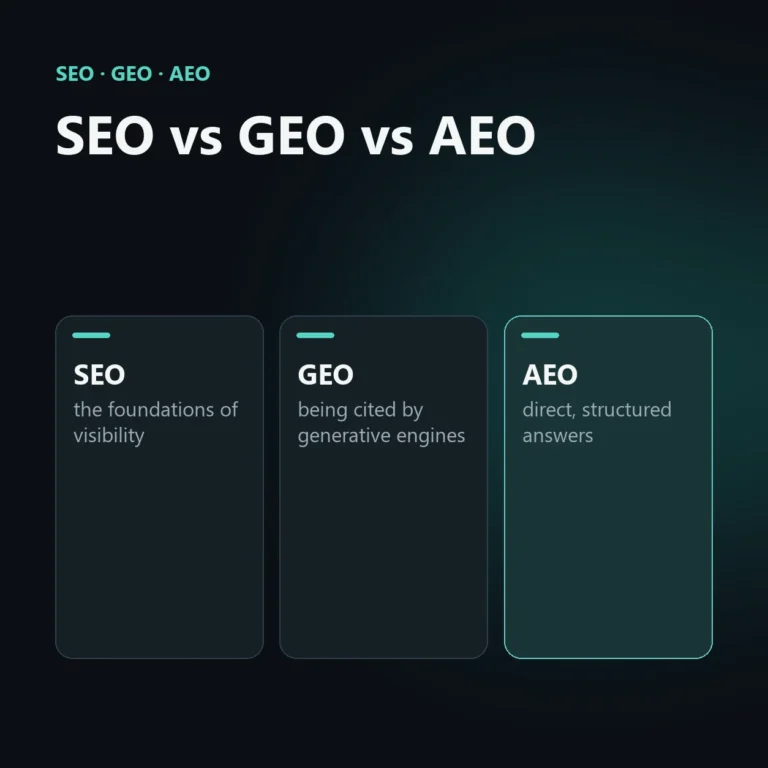 SEO vs GEO vs AEO: the real differences and what changes for a companyThe difference between SEO, GEO and AEO explained in practical terms: what really changes for your company in 2026. geo-seo.pro guide.Read the article →
 Digital marketing in 2026: what has really changed (and what hasn't)Digital marketing in 2026: what has really changed and what hasn't compared with previous years.Read the article →
Technical SEO and audits
A site can have excellent content and remain invisible because search engines struggle to crawl it, find it slow or see it change without criteria. The technical side is the foundation on which everything else rests: speed, structure, migrations, overall health. An audit serves to see this foundation with data in hand, before spending on content or links. Here I talk about what to check, in what order and at what reasonable cost.
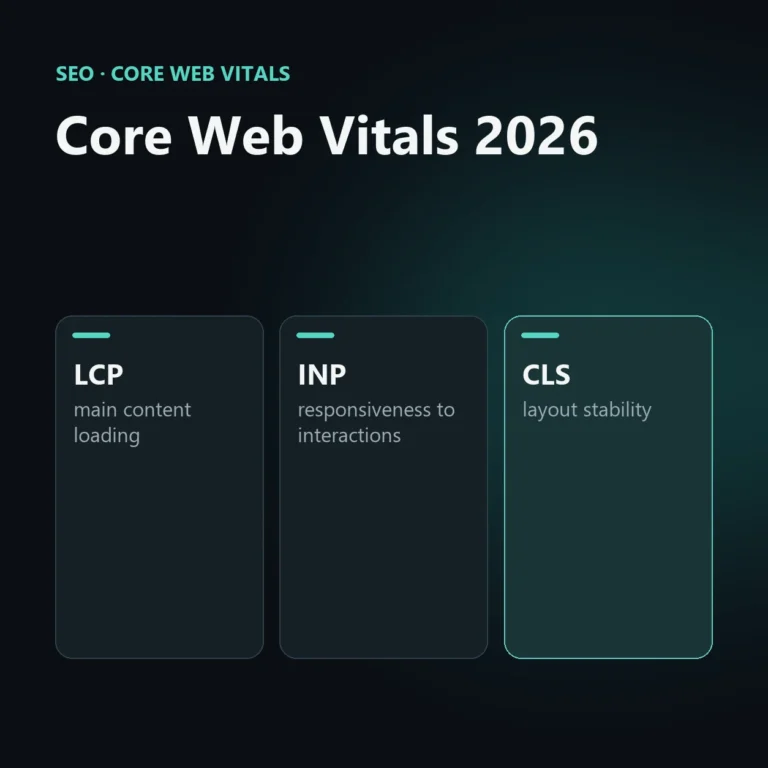 Core Web Vitals 2026: what they are and how to improve them step by stepCore Web Vitals are three Google metrics that measure the loading speed (LCP), responsiveness (INP) and visual stability (CLS) of a web page. From a…Read the article →
 Migrating a site without losing organic traffic: the complete checklistA site migration without losing organic traffic requires 301 redirect mapping, a preserved URL structure and post-launch monitoring.Read the article →
 How much does an SEO audit cost in Italy? 2026 prices and what drives themAn SEO audit in Italy costs on average between €250 and €5,000, depending on the size of the site, the depth of the analysis and the experience of…Read the article →
Related services: SEO audit, SEO migration.
E-commerce SEO
An online store is not a bigger brochure site: it has thousands of URLs generated by filters, variants and categories, nearly identical product pages and a catalog that changes every day. These are problems that small sites don’t have and that, if neglected, dilute the visibility of the whole catalog. Here I tackle the typical e-commerce issues, from page structure to platform choice, with an eye on what pays off most relative to the effort.
 Duplicate content across product variants: how to fix it without losing SEODuplicate content across product variants is solved with canonical tags pointing to the main product page, or by consolidating the variants into a…Read the article →
 PrestaShop vs Shopify: SEO differences for online sellersPrestaShop offers greater technical control and SEO flexibility thanks to direct access to the code, while Shopify guarantees speed and ease of…Read the article →
Related service: e-commerce SEO.
Content and authority
Publishing a lot is no longer enough. Search engines and AI assistants choose sources based on how competent and reliable they consider them, and a site full of weak texts suffers overall. This applies to new content as well as old: some needs strengthening, some merging, some removing. Here I cover how authority is built, how to decide what to keep and how to get talked about outside your own site.
 E-E-A-T in the AI era: how to build authority when an algorithm is the readerE-E-A-T in 2026: how to build authority when algorithms are among those reading your content. geo-seo.pro guide.Read the article →
 Content pruning: what it is and when removing content helps SEOContent pruning is the removal or merging of low-value content from a site to improve the average quality perceived by Google.Read the article →
 AI-written content: what Google really says about penaltiesGoogle doesn't penalize content just because it was generated with artificial intelligence: it penalizes low-quality content created mainly to…Read the article →
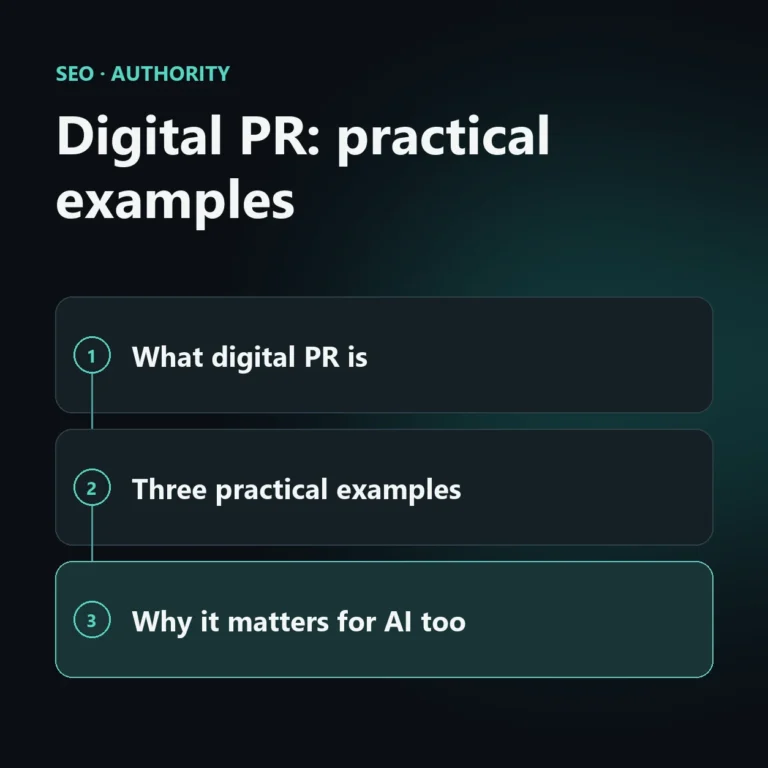 Digital PR: practical examples of how to build authority onlineDigital PR builds online authority by earning mentions and links from reputable third-party publications and sites, through content that truly…Read the article →
Related service: brand authority.
Strategy and measurement
Individual actions only work inside a plan, and a plan is judged by the right results. Looking only at ranking position says little: with AI answers and zero-click searches you need different indicators, tied to enquiries, leads and sales. In this section I reason about how to move from an analysis to a strategy that lasts over time and how to tell, with numbers in hand, whether it is working.
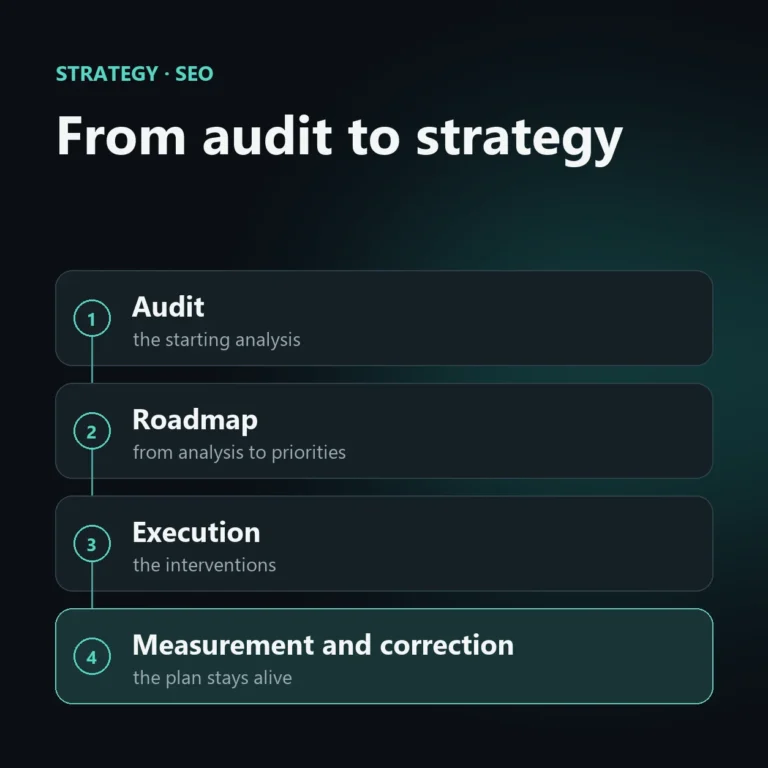 From audit to strategy: how to build a visibility plan that lastsFrom audit to strategy: how to build a digital visibility plan that lasts over time.Read the article →
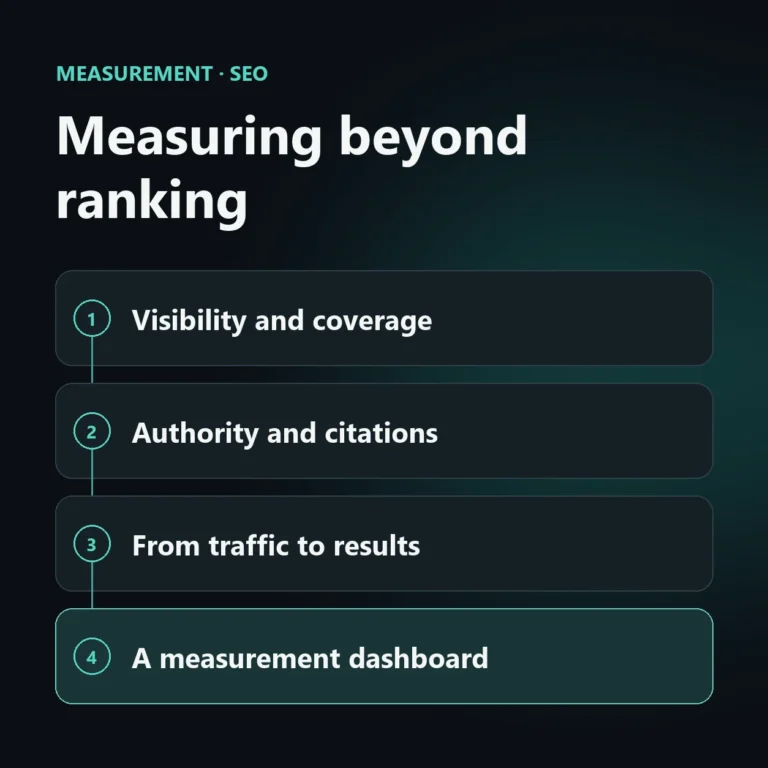 How to measure the success of a visibility strategy (beyond ranking)How to measure the success of a visibility strategy by going beyond simple SERP ranking.Read the article →
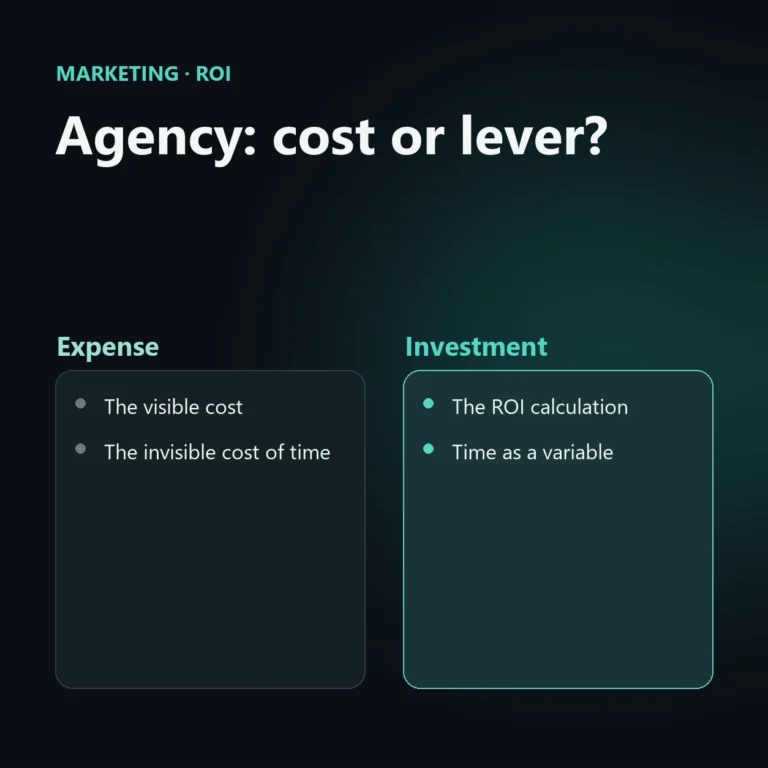 Why hiring an agency isn't a cost, it's a lever: the calculation nobody doesWhy hiring an agency is not a cost but a lever: the ROI calculation almost nobody does.Read the article →
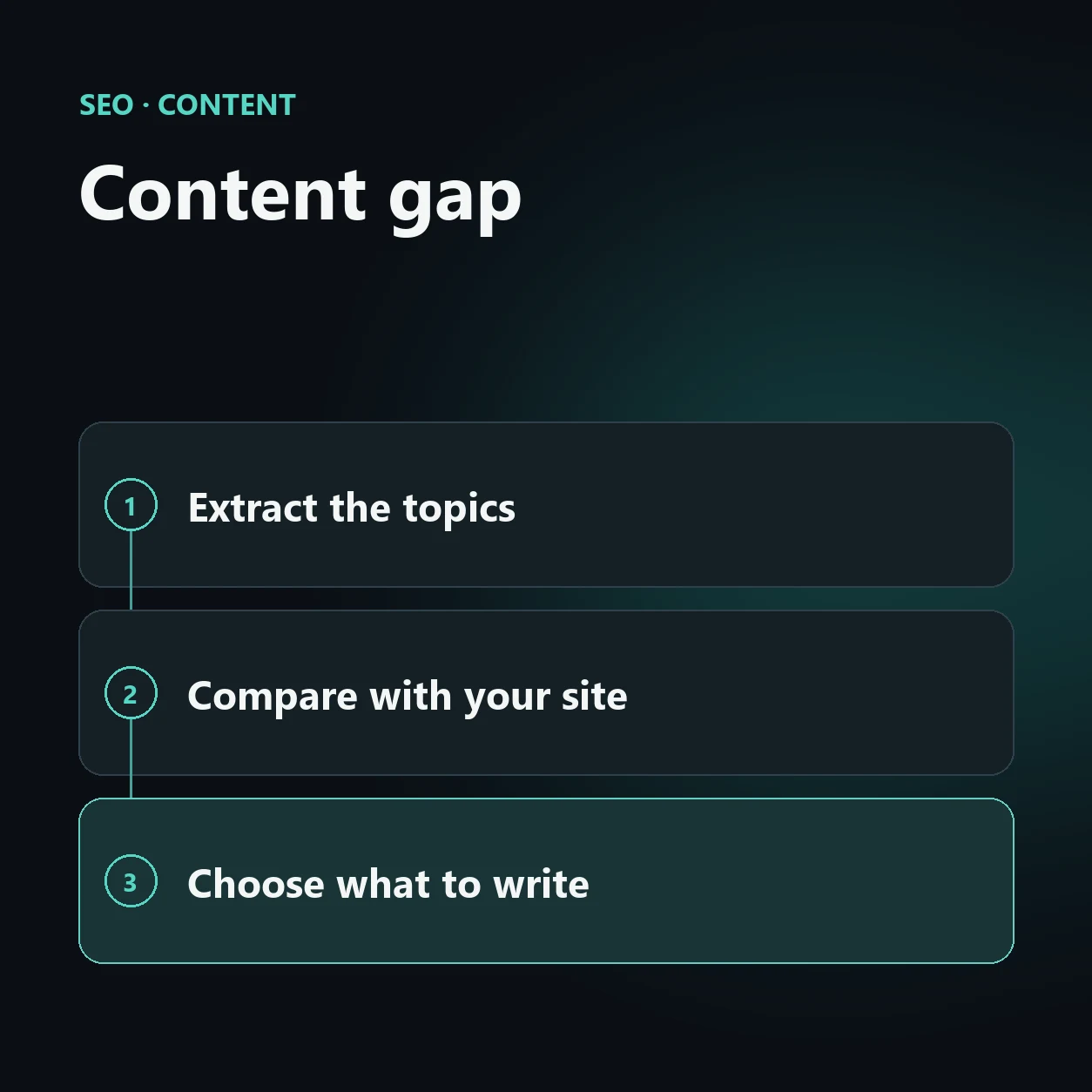
A content gap is the list of topics for which your competitors appear on Google and you have no page that answers. It is the most concrete way to decide what to write next, because it starts from searches that already exist and pages that already work. This guide explains how to get it, how [...]
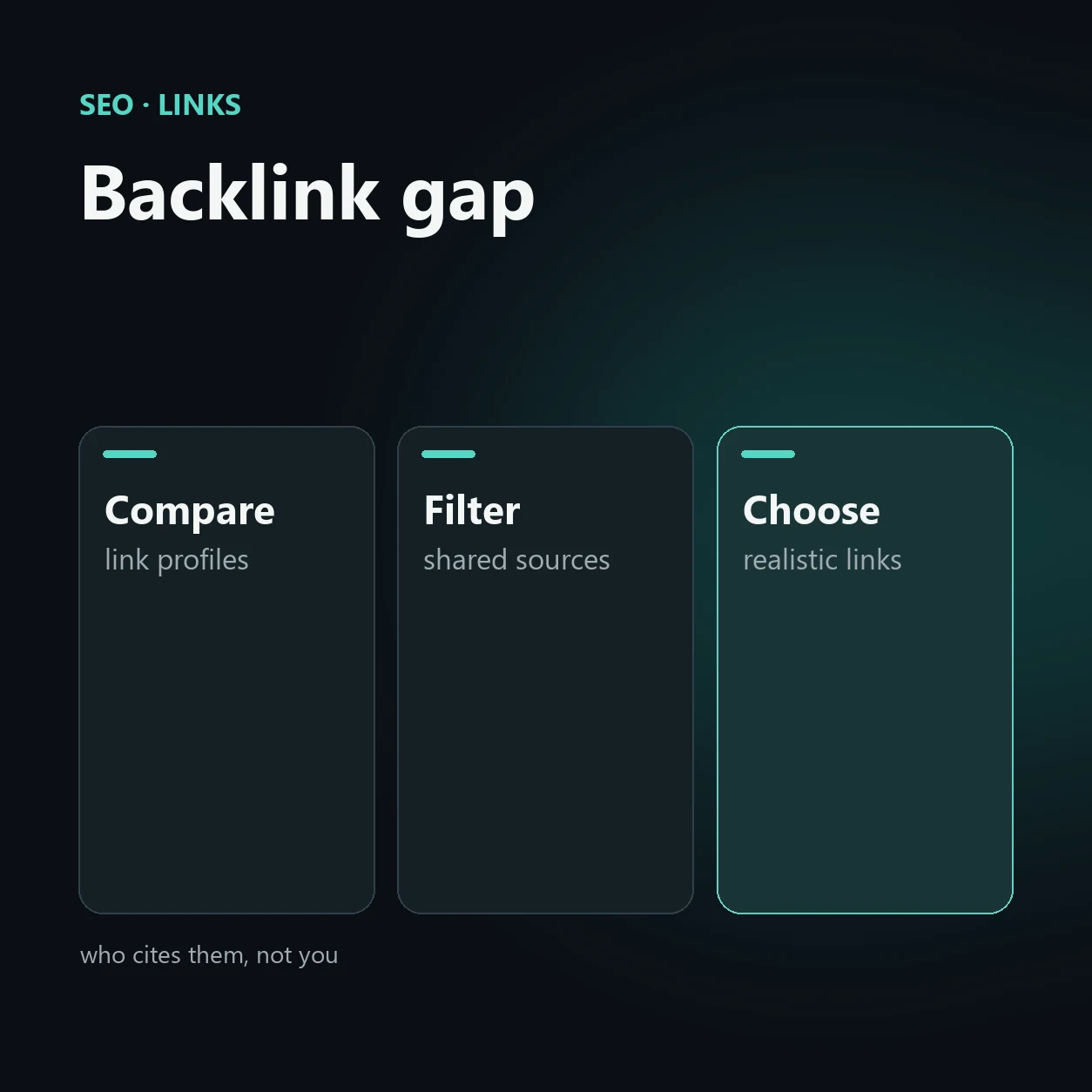
A backlink gap is the comparison between the sites that link to your competitors and those that link to you: the list of who cites them and not you. It helps you understand where links can be earned in your industry and which ones are realistic for you. It is not for chasing quantity. This [...]
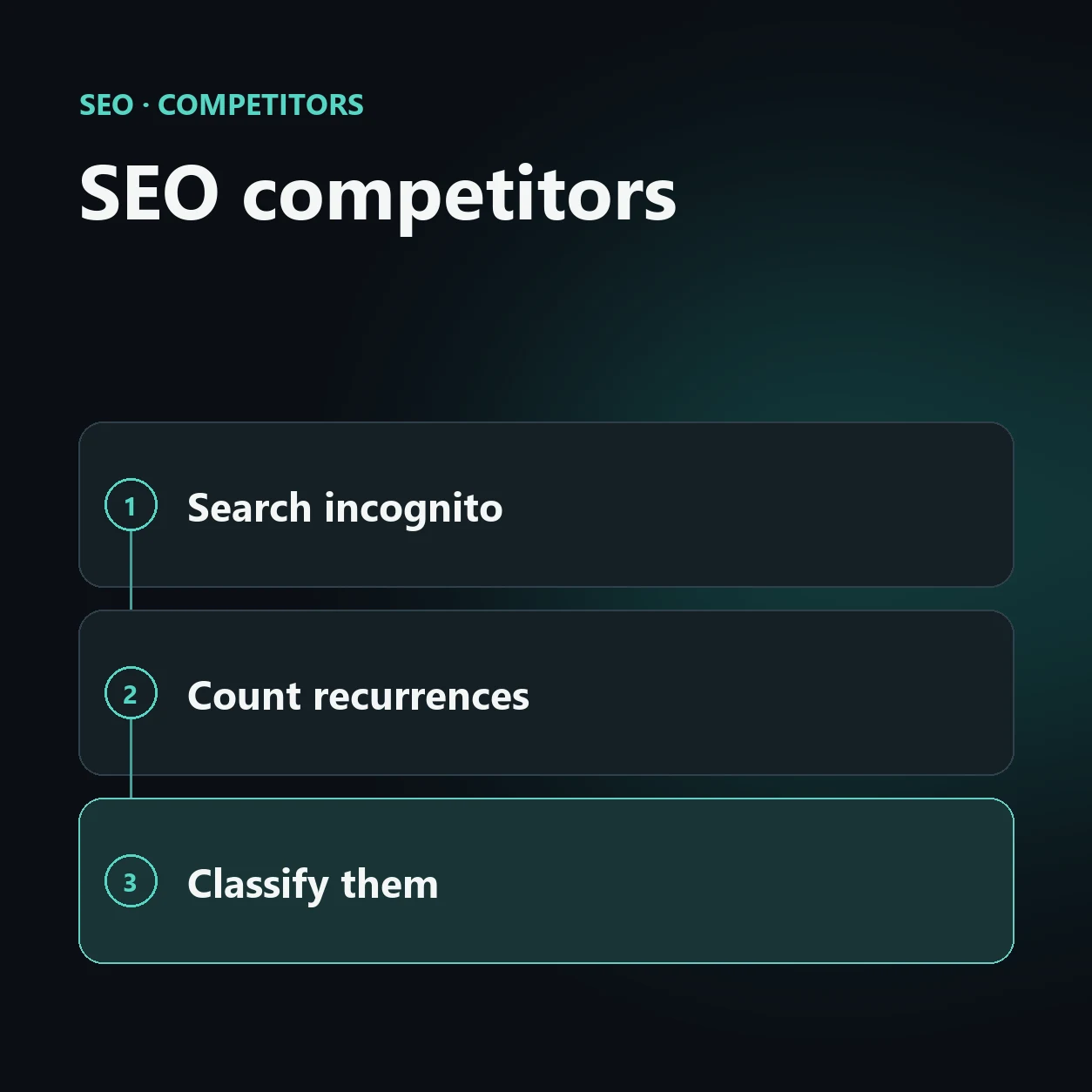
Your real SEO competitors are the sites that appear in Google’s results for the searches you care about, not necessarily the companies that sell what you sell. Finding them takes a method: start from the searches, not from the list of competitors you already know. This guide explains how to build the list in an [...]
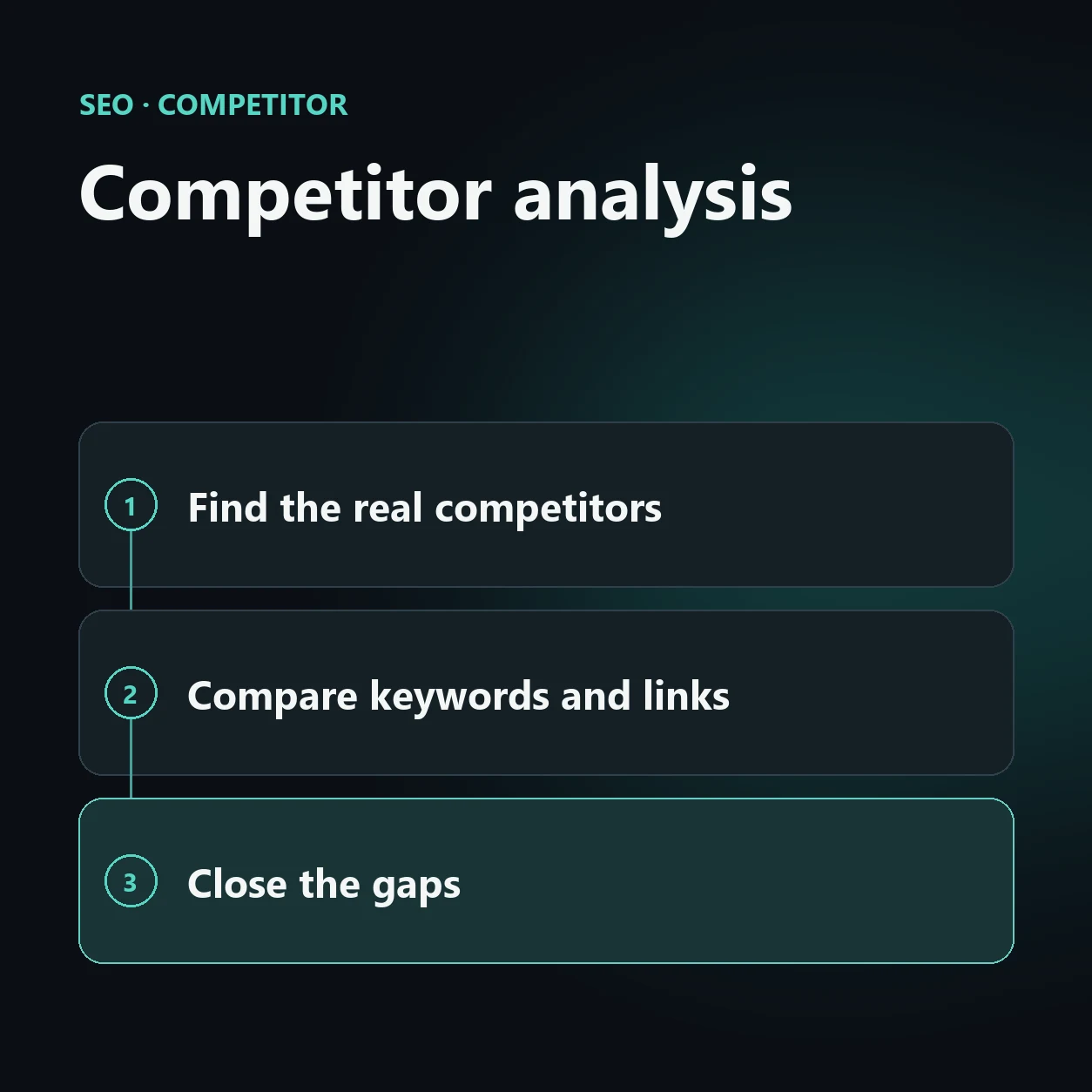
Online competitor analysis means working out who ranks ahead of you in search results, why they do, and what you can do to overtake them. It is not limited to looking at the competitors you already know: it starts from Google’s real results, because your SEO competitors are not always the ones in your industry. [...]
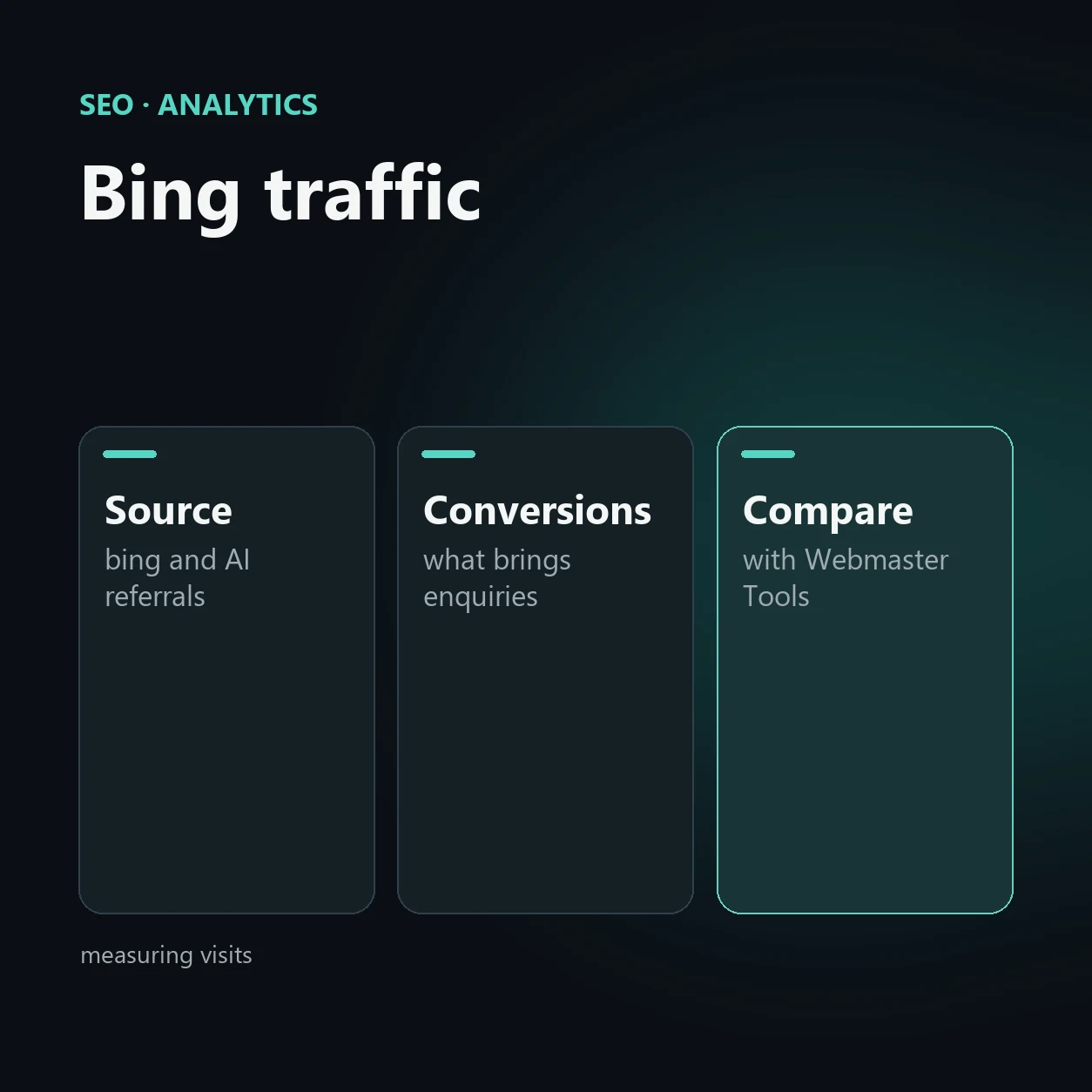
To see Bing traffic in Google Analytics 4, look at the traffic acquisition report and filter by source. Organic search traffic from Bing usually appears with source “bing” and medium “organic”; visits from AI assistants may appear as referral sites. This guide explains where to find the data, how to compare it with Bing Webmaster [...]
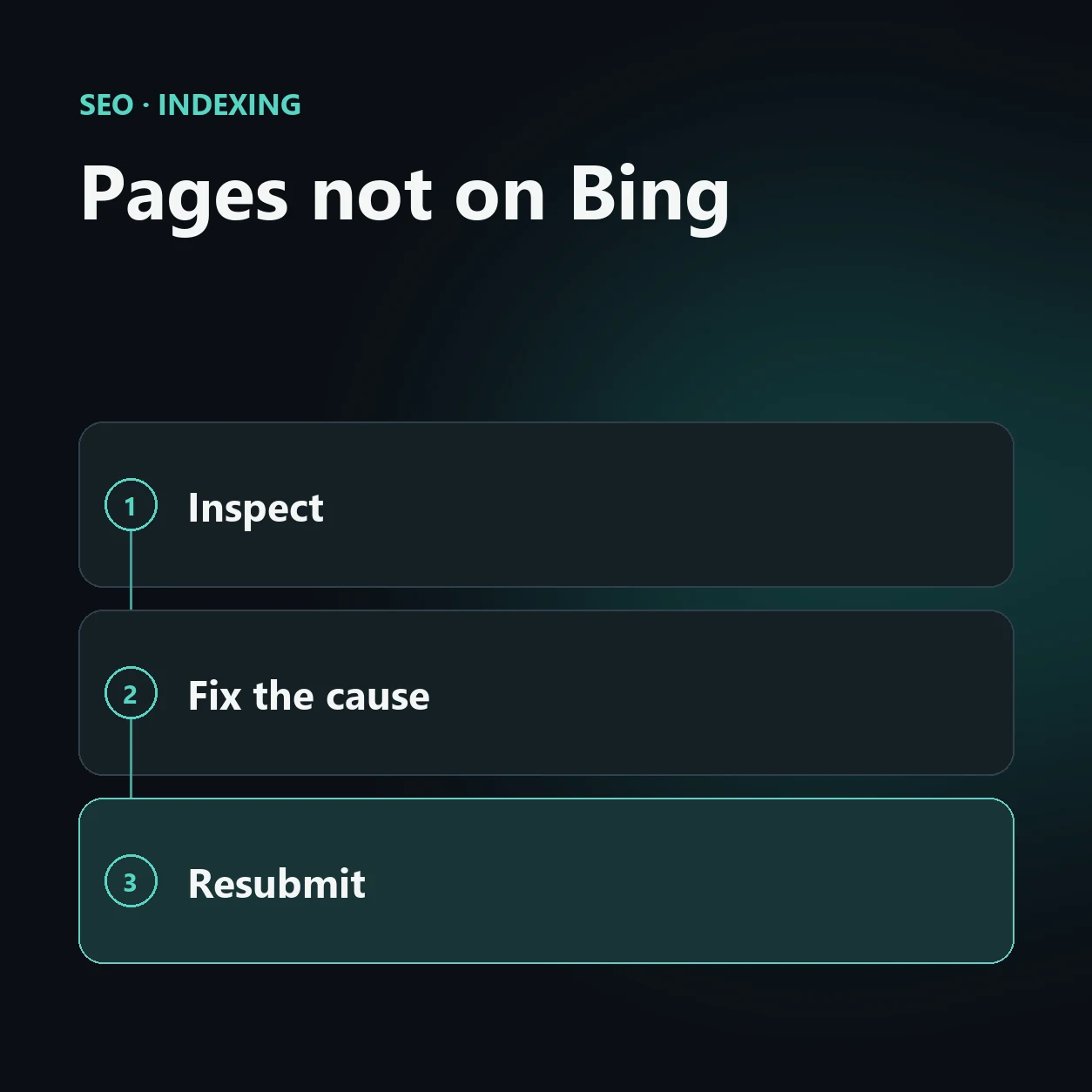
A page does not show on Bing when Bing has not found it, could not read it, or decided not to put it in the index. They are three different problems with different fixes: telling them apart is half the work. This guide follows a simple order of checks, from the most trivial causes to [...]
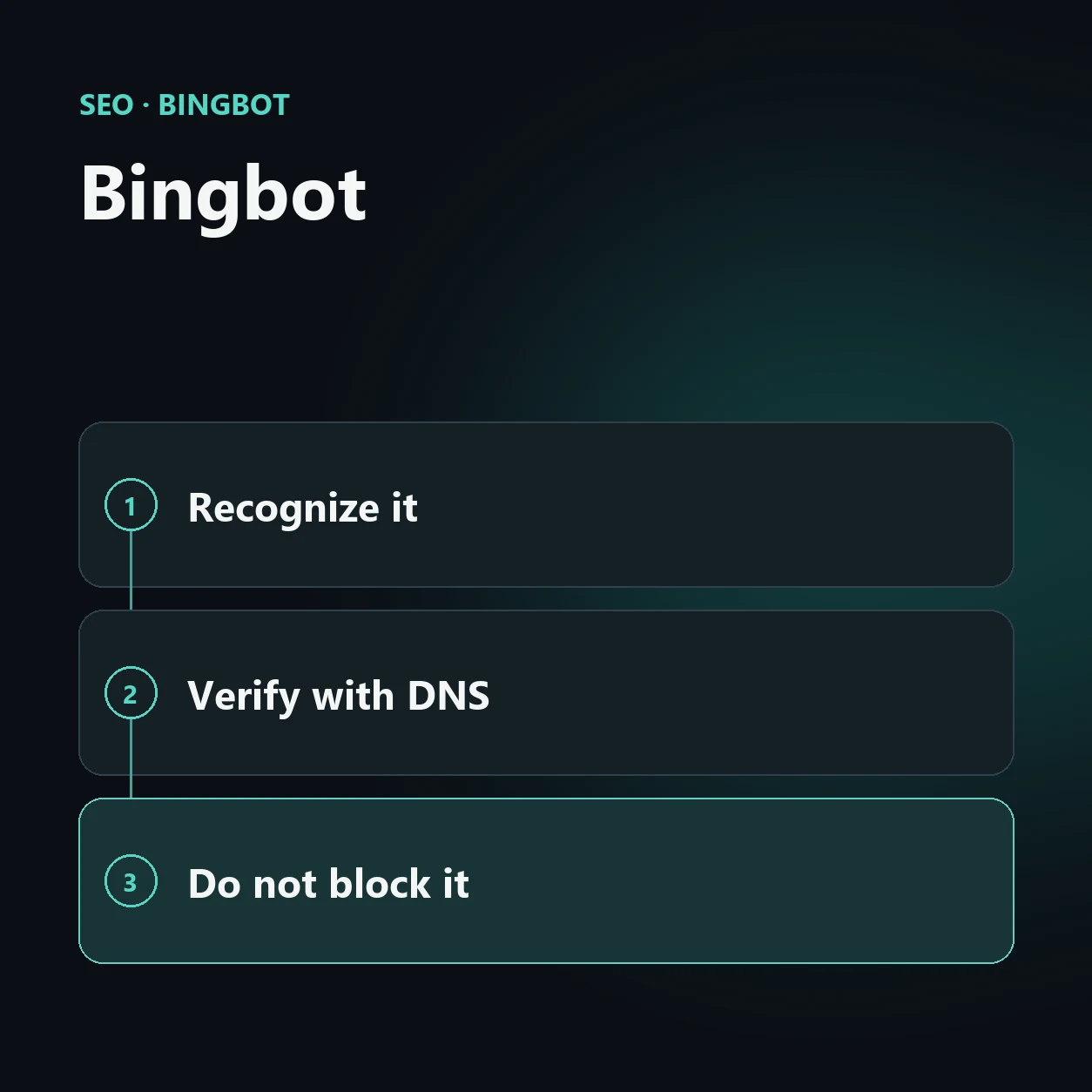
Bingbot is Microsoft Bing’s crawler: the program that visits a site’s pages to discover them and keep them up to date in the index. Recognizing it serves two opposite purposes: not blocking it by mistake, and not letting in whoever pretends to be Bingbot. This guide explains how to verify that a visit is genuine, [...]
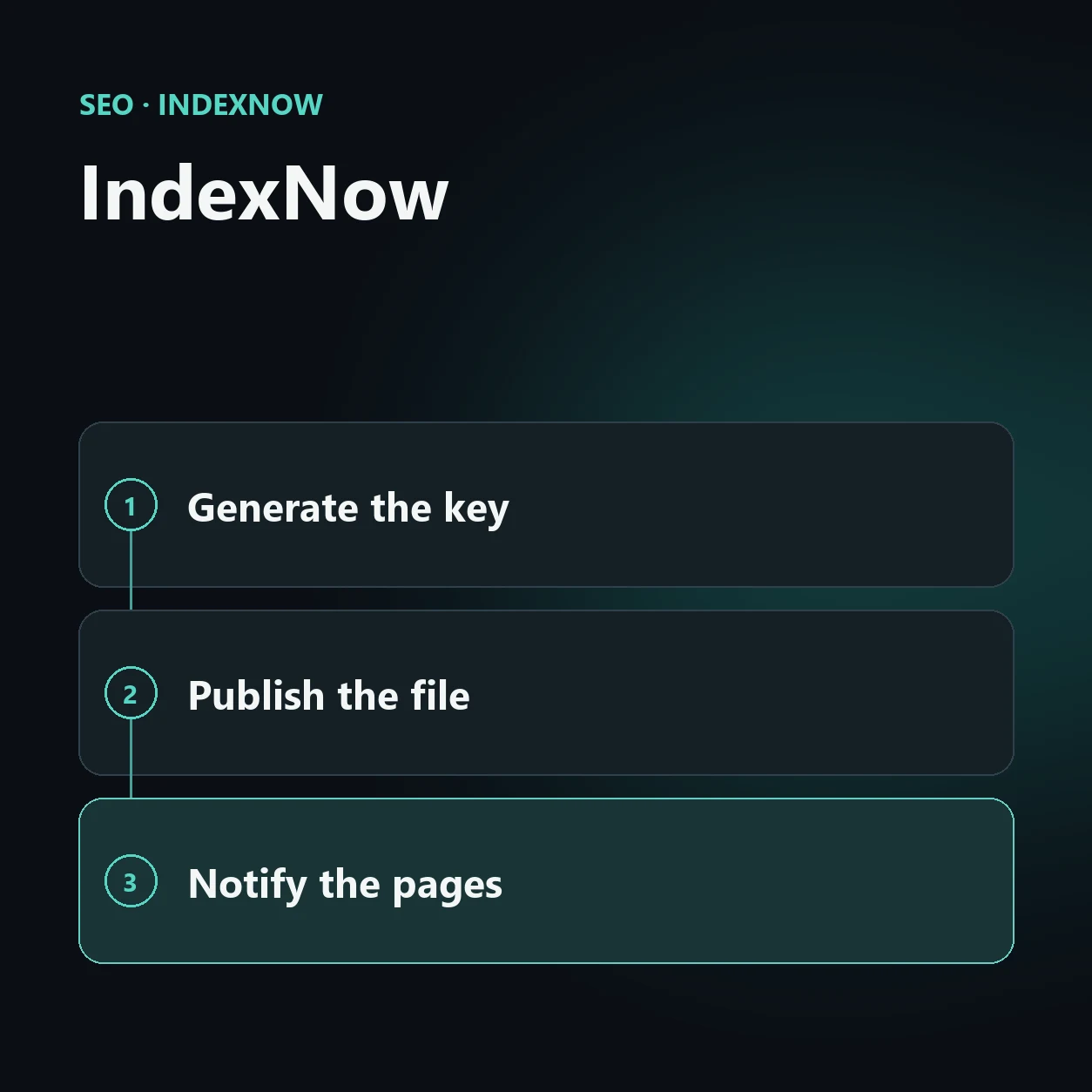
IndexNow is a protocol that lets a website tell search engines that a URL has been created, updated or deleted, without waiting for the engine to come back and check. Microsoft and Yandex launched it in 2021. It does not guarantee indexing: it gets the news across right away, and the decision to index stays [...]
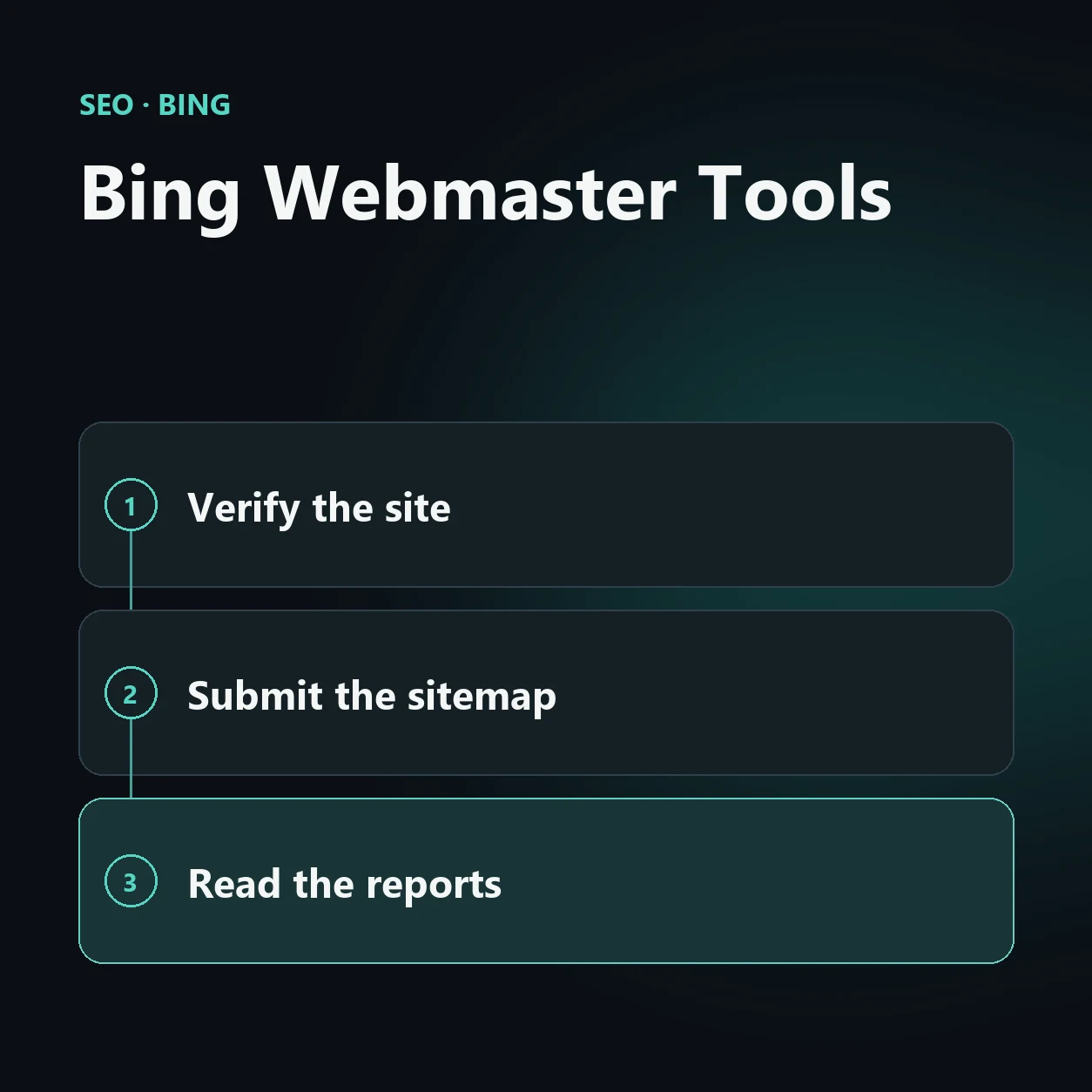
Bing Webmaster Tools is Microsoft’s free tool for registering a site with Bing, submitting a sitemap, checking indexing and reading search performance. It is the counterpart of Google Search Console, with data that covers only Bing and Microsoft’s AI-generated answers. Setting it up takes a few minutes, and without it you cannot know what Bing [...]
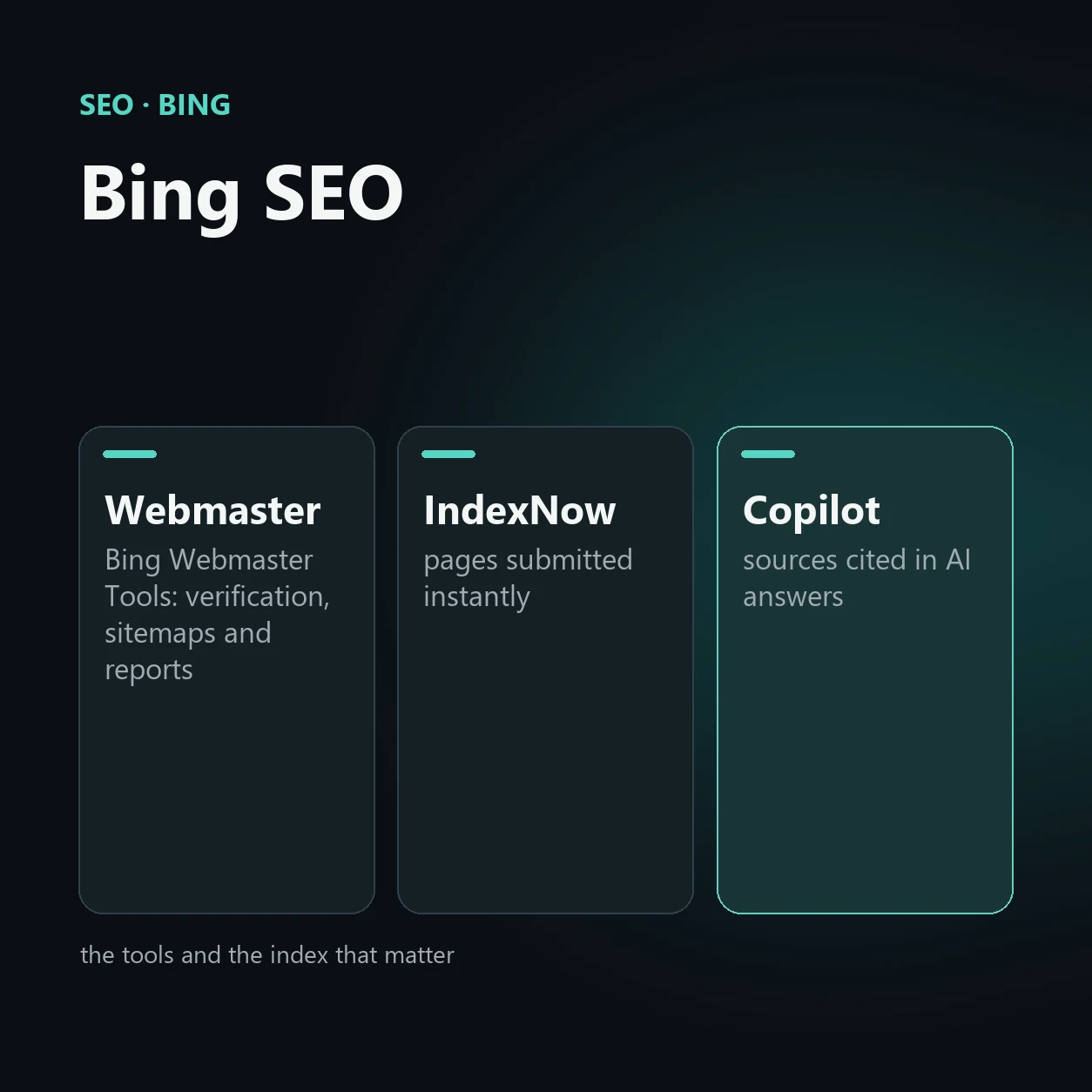
Bing SEO is the work that makes a website visible in Microsoft’s search results. The extra effort compared with Google is small: register the site in Bing Webmaster Tools, use IndexNow to announce new pages, and check that Bing’s index actually understands the site. That last point matters beyond Bing itself, because Microsoft Copilot draws [...]