GEO: Generative Engine Optimization Guides
Here I collect the blog articles on Generative Engine Optimization: how to be cited by ChatGPT, Google AI Overviews, Gemini and Perplexity, and what doesn’t work. The reference service is GEO.
Understanding GEO
Generative Engine Optimization is about being cited by ChatGPT, Gemini, Perplexity and Google’s AI answers. It is new ground, where visibility doesn’t depend on a ranking position but on being recognized as a source, and where few brands are really cited. Here I explain how these systems reason, why a site can be ignored even if it ranks well and what changes for anyone working in SEO.
 GEO: the new frontier of visibility that (almost) nobody is coveringGenerative Engine Optimization: the new frontier of visibility that almost nobody covers yet. geo-seo.pro guide.Read the article →
 ChatGPT cites few brands: what it means for your companyFew brands are cited by ChatGPT: what it means for your company and how to improve AI visibility.Read the article →
 Why ChatGPT doesn't cite your site (and how to change that)ChatGPT doesn't cite a site for three main reasons: content that isn't authoritative enough, not structured to be extracted, or not yet indexed by…Read the article →
 Google AI Overviews: how they work and what changes for SEOAI Overviews are the summaries generated by Google's artificial intelligence that appear above the traditional organic results, synthesizing…Read the article →
Related services: LLM optimization, Google AI Overviews and Gemini.
Authority and citations
Generative engines tend to pick up the sources they recognize as reliable, consistent and mentioned elsewhere too. So writing well on your own site isn’t enough: what counts is the reputation built over time, on and off the site. Here I cover which signals carry weight, why there are no quick shortcuts and how to work toward becoming a source that models choose to cite.
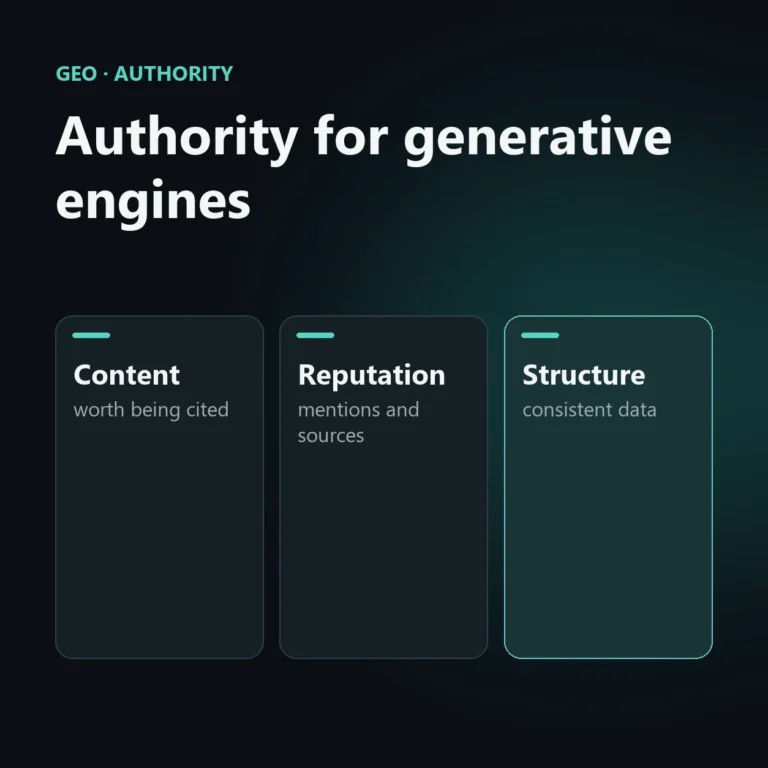 How to build authority for generative engines (without shortcuts)
Related services: LLM citations, brand authority.
Shortcuts and myths
Around GEO circulate tricks and promises of quick results, and not all of them have a foundation. Telling what really helps from what is just noise saves you time and money spent chasing fads. Here I examine the most common myths, what certain practices are really for and how much you can expect from each.
 The llms.txt myth and other shortcuts for AIThe llms.txt myth: what it really does and what it can't do for your site's AI visibility. geo-seo.pro deep dive.Read the article →
 llms.txt: what the new standard is and whether it really helps AI rankingThe llms.txt file is a proposed standard that lets websites provide a structured summary of their content designed to be read by language models,…Read the article →
Engines compared
ChatGPT, Perplexity, Gemini and Google’s AI answers don’t choose sources in the same way: some draw mostly on what the model has learned, others search and cite pages in real time. As a result, the content most likely to be picked up also changes. Here I compare how the different engines work and what that implies for your visibility strategy.
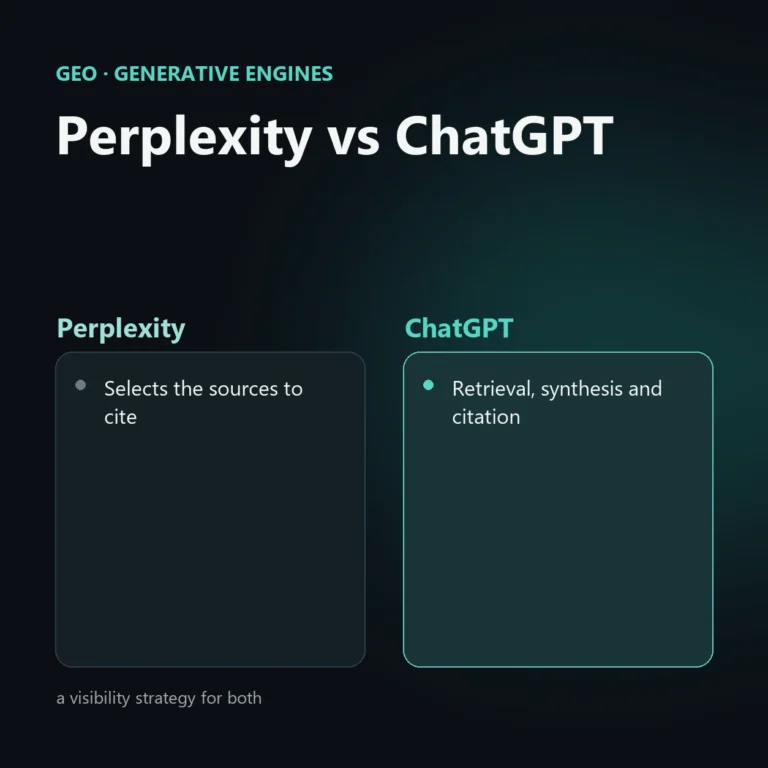 Perplexity vs ChatGPT: two generative engines, two visibility strategies
Related services: ChatGPT optimization, Perplexity optimization.
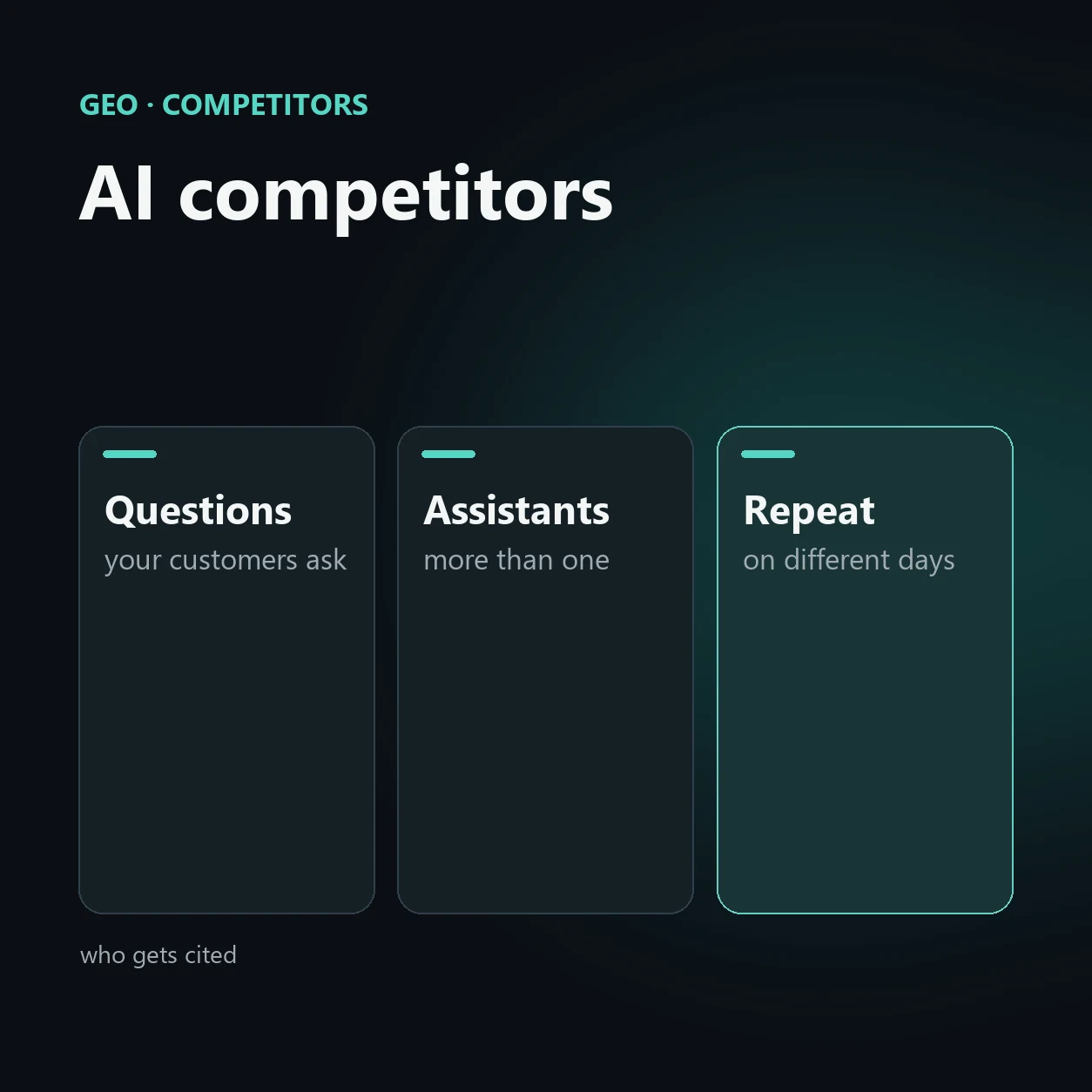
In AI-generated answers, your competitors are the sites cited as a source instead of yours. They can be different from the ones you see on Google’s first page. Finding them takes a manual test with fixed rules, because answers change from one request to the next. This guide proposes a simple method and says what [...]
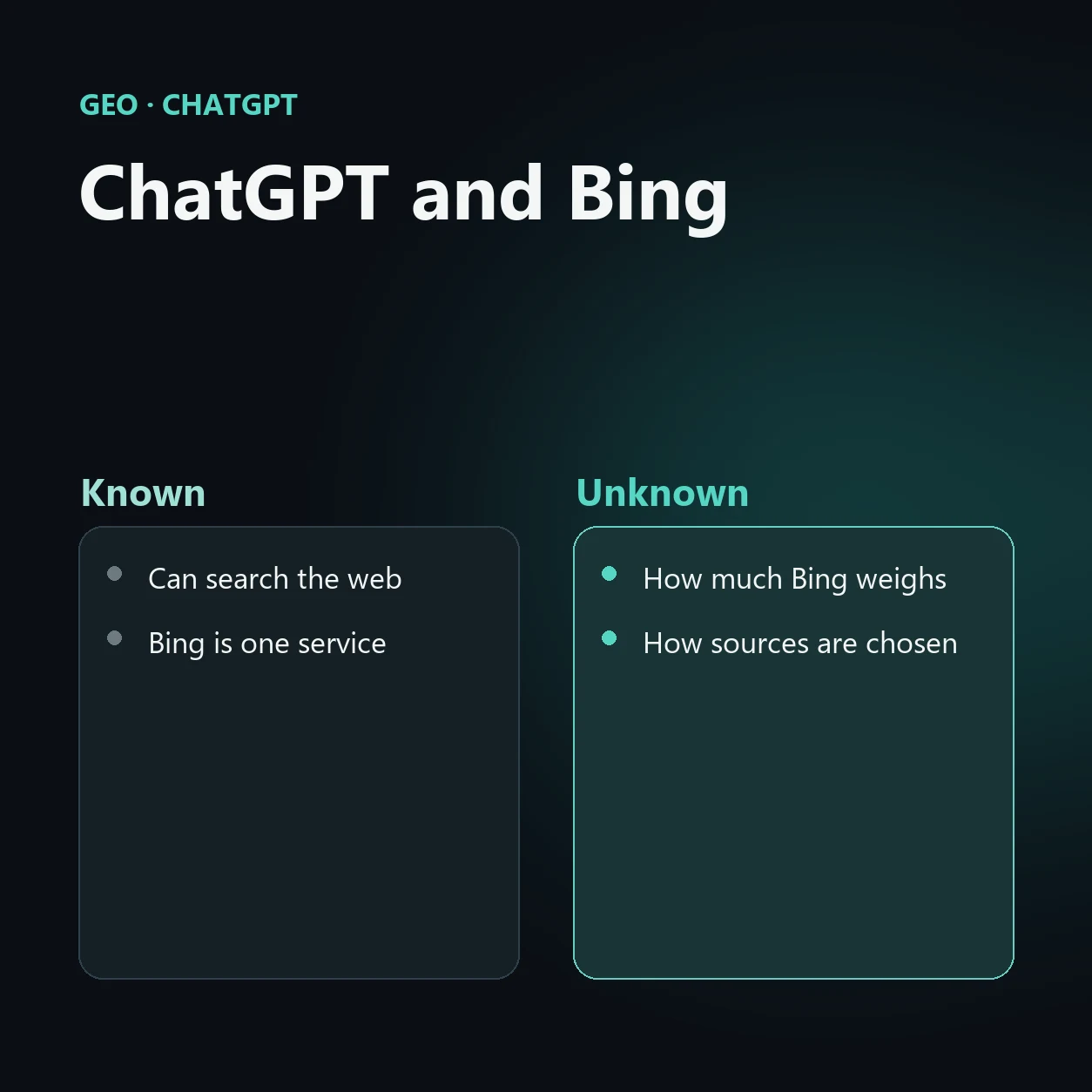
Bing is one of the search services ChatGPT can draw on to answer with information from the web, but it is not the only one and its exact weight is not public. Anyone saying “to appear in ChatGPT you just need to rank on Bing” is oversimplifying: no official source shows it in that form. [...]
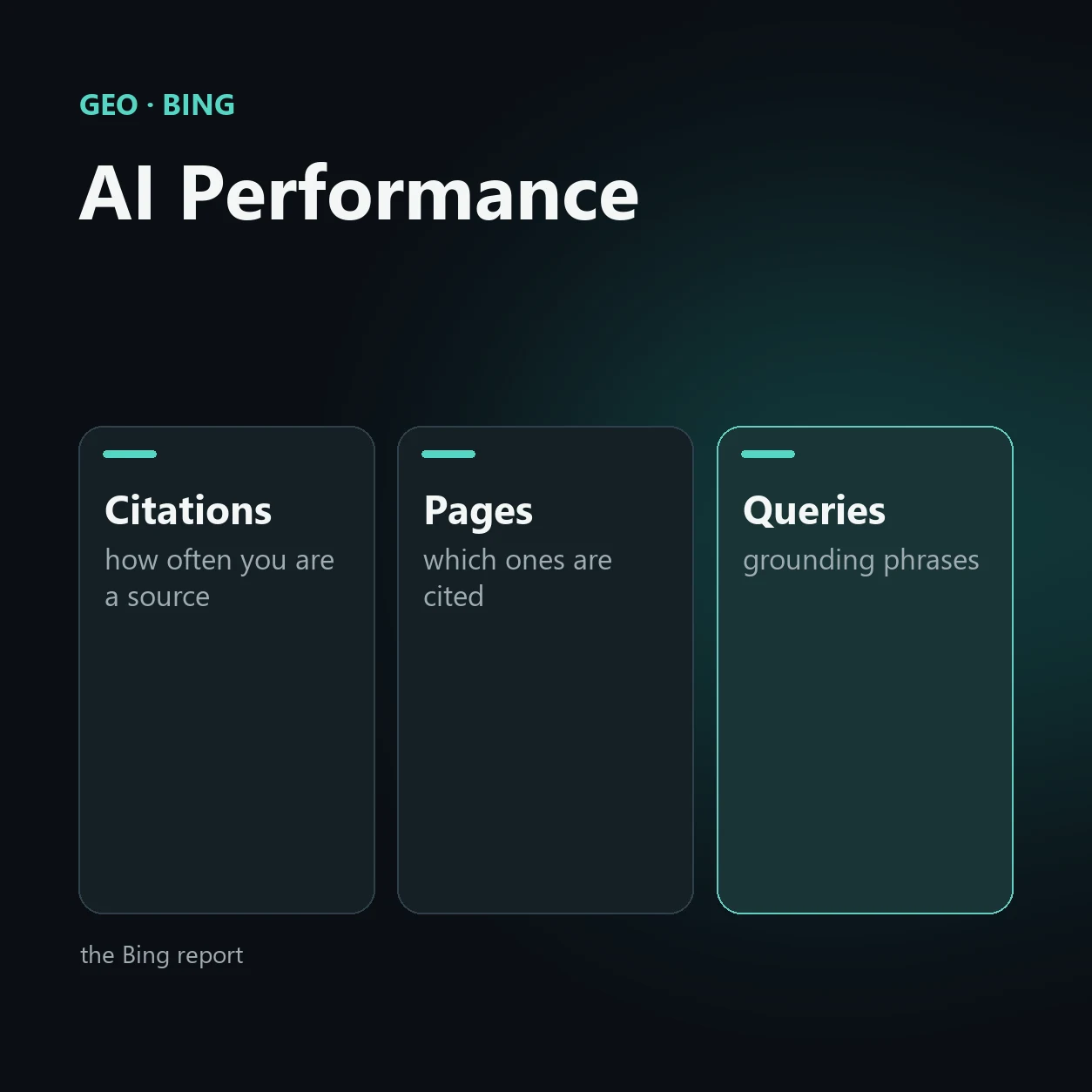
AI Performance is a report in Bing Webmaster Tools that counts how many times a site’s content is shown as a source in Microsoft’s AI-generated answers. It covers Microsoft Copilot, AI-generated summaries in Bing and select partner integrations. It has been in public preview since February 10, 2026, and it measures citations, not clicks or [...]
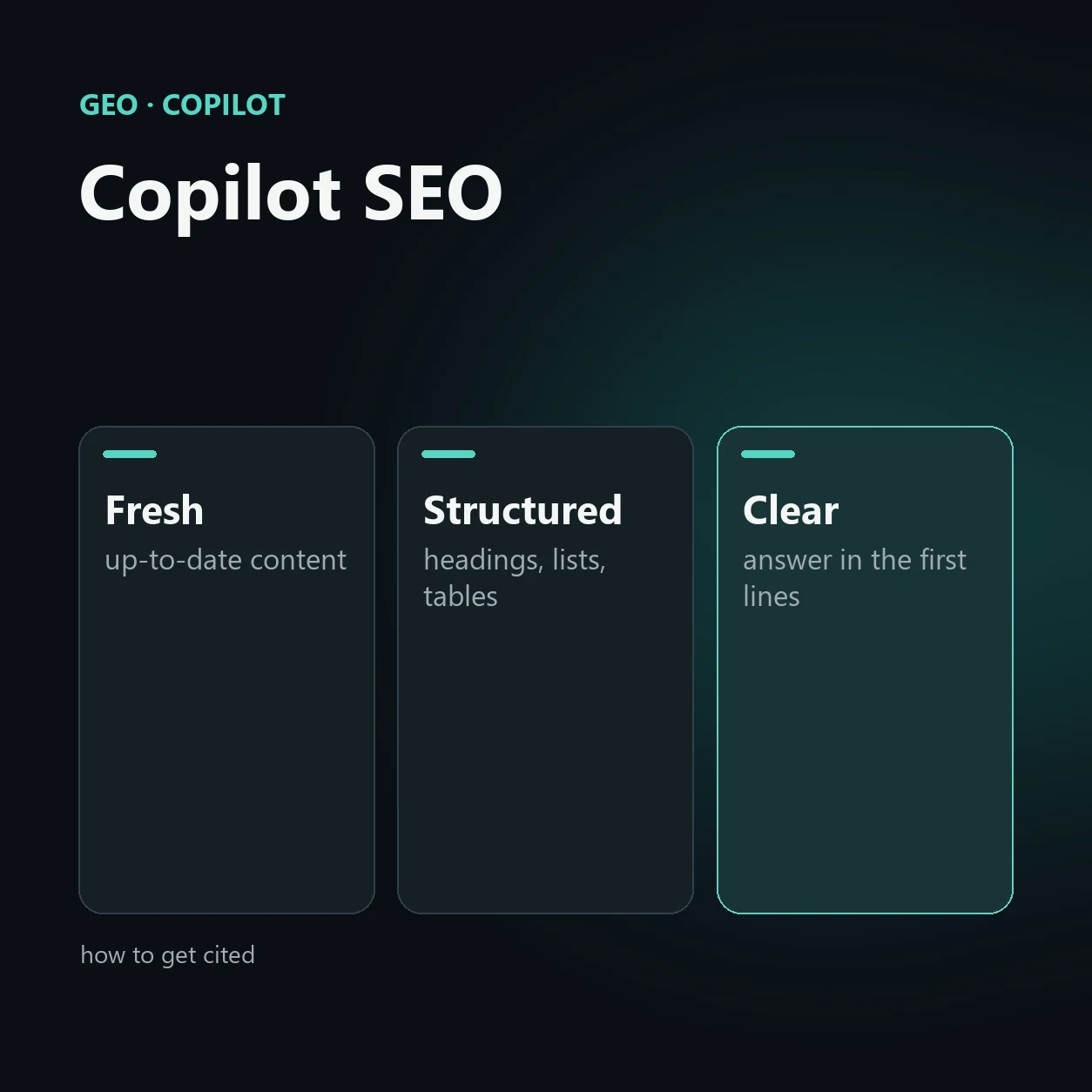
There is no trick to getting cited by Microsoft Copilot: you need pages that Bing has indexed, that answer a specific question clearly, and that are structured so an automated system can extract the answer. Microsoft has published guidance on how to write to be included in AI answers, and it is the best place [...]
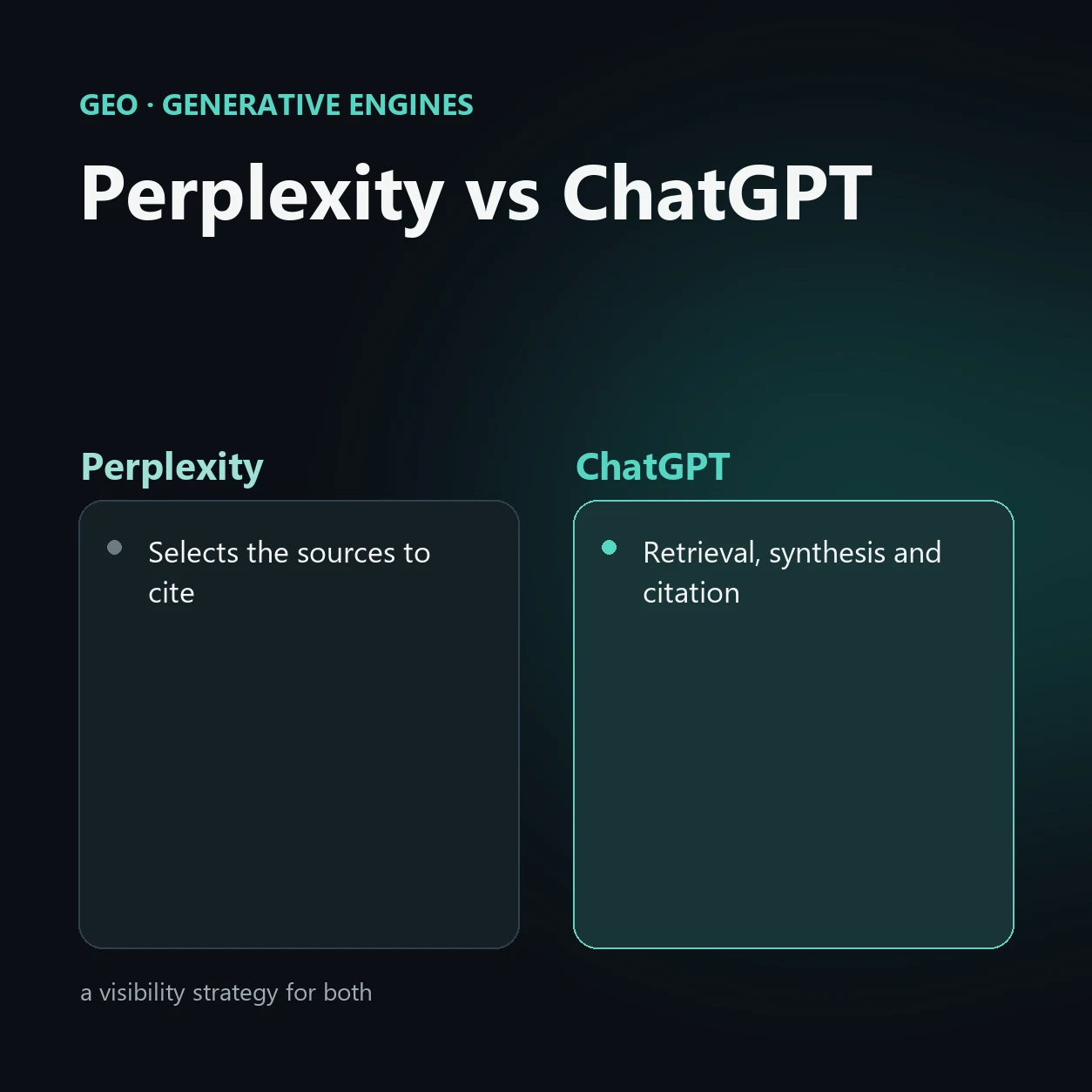
Perplexity visibility is the ability of a piece of content to be cited, summarized and linked by Perplexity in its generative answers. Unlike traditional search engines, which return a list of links, generative engines build a single answer from multiple sources and explicitly cite only some of them. This radically changes the rules of the [...]
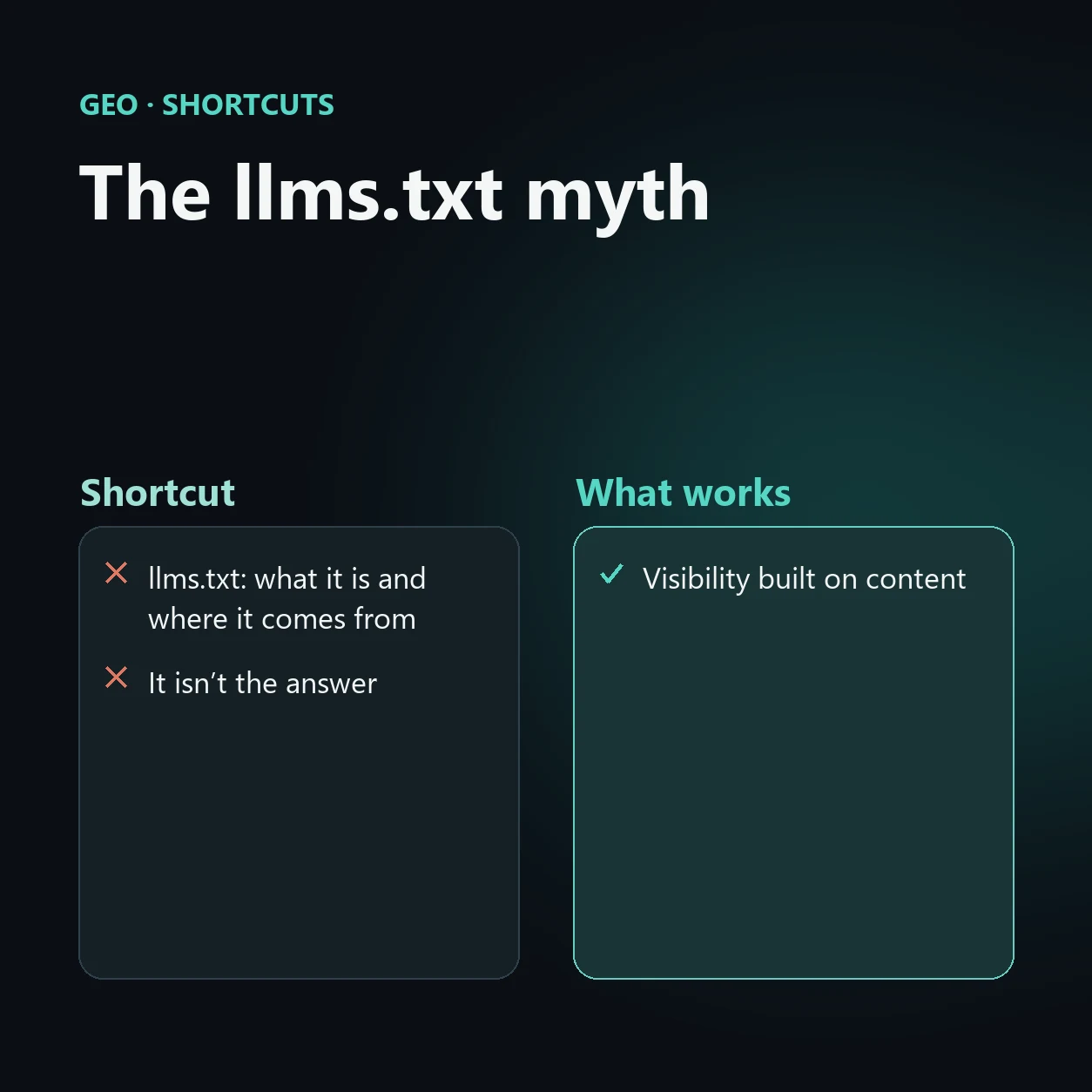
llms.txt is a text file that some sites publish in the root of the domain to give AI agents a concise map of the most useful content, but it is not a shortcut that guarantees visibility in generative engines. Since the proposal began to circulate, many marketing professionals have treated it as a kind of [...]
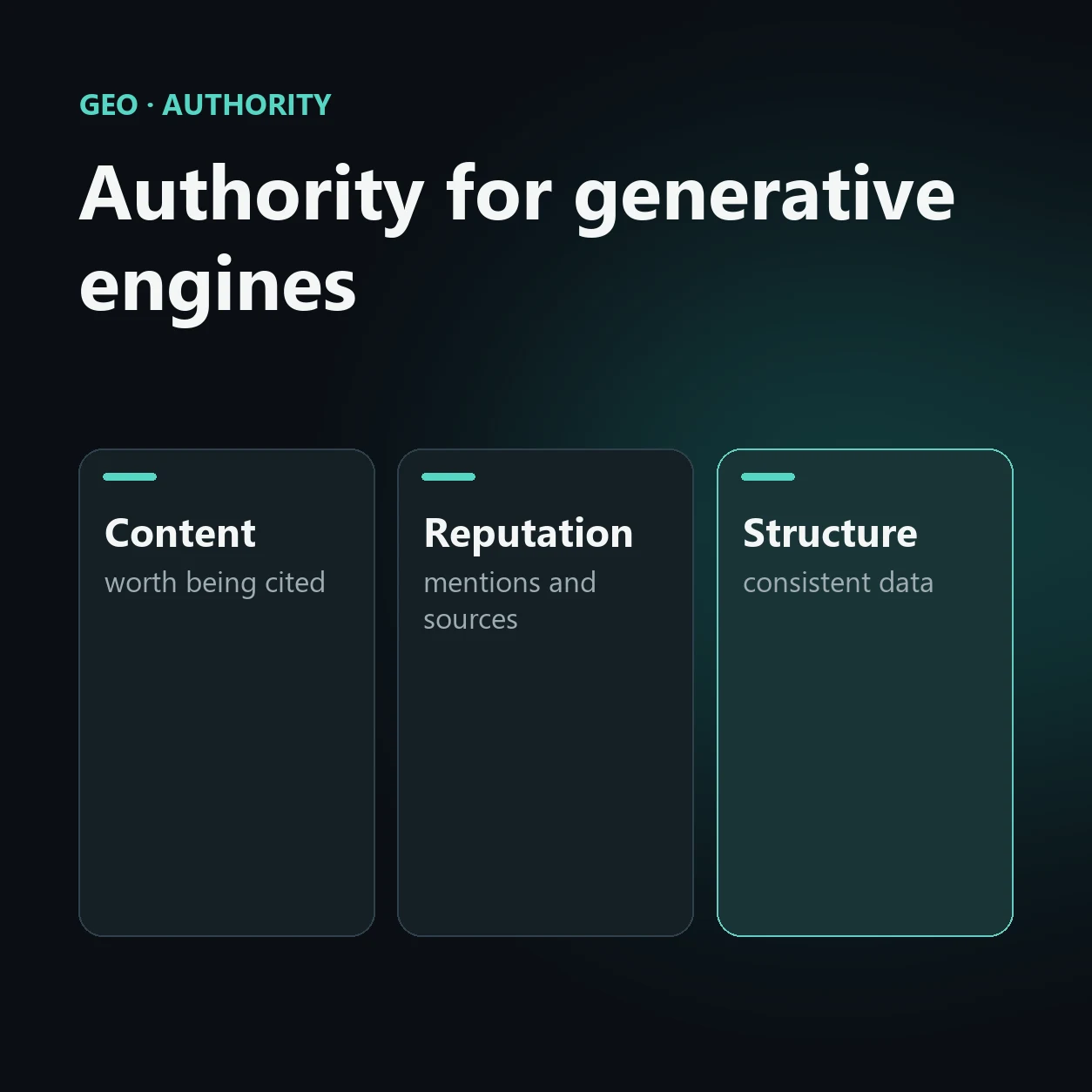
Building authority for generative engines means making an artificial intelligence system, when it generates an answer, choose to cite your company as a reliable source on a certain topic. It is not a technical trick nor a parameter to optimize overnight: it is the cumulative result of solid content, verifiable reputation and consistency over time. [...]
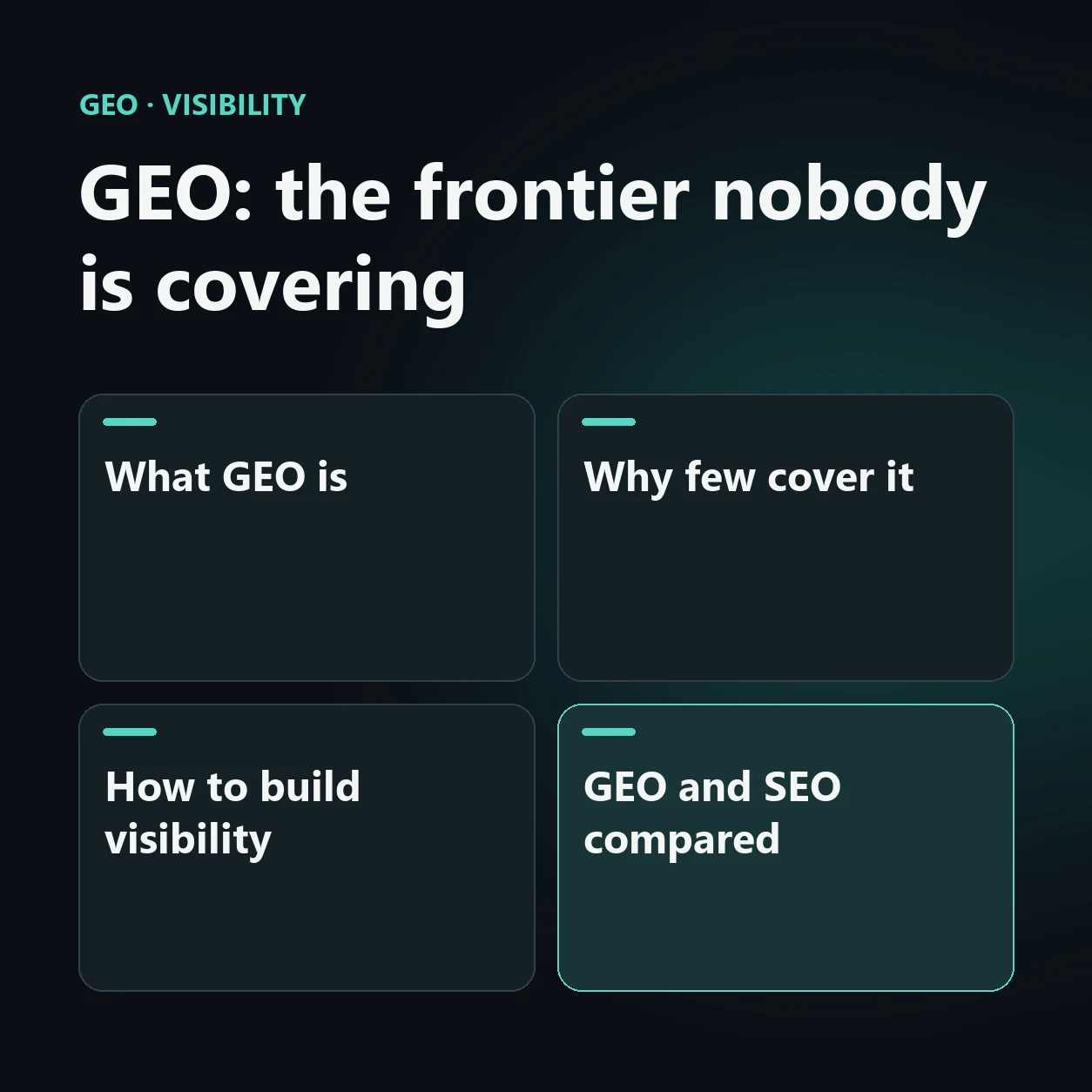
Generative Engine Optimization is the set of practices that make content citable and visible in answers generated by artificial-intelligence-based engines. While classic SEO keeps covering the blue-link results, a growing share of informational searches is shifting toward answers synthesized by language models, which aggregate sources and return a single text. In this hybrid space competition [...]
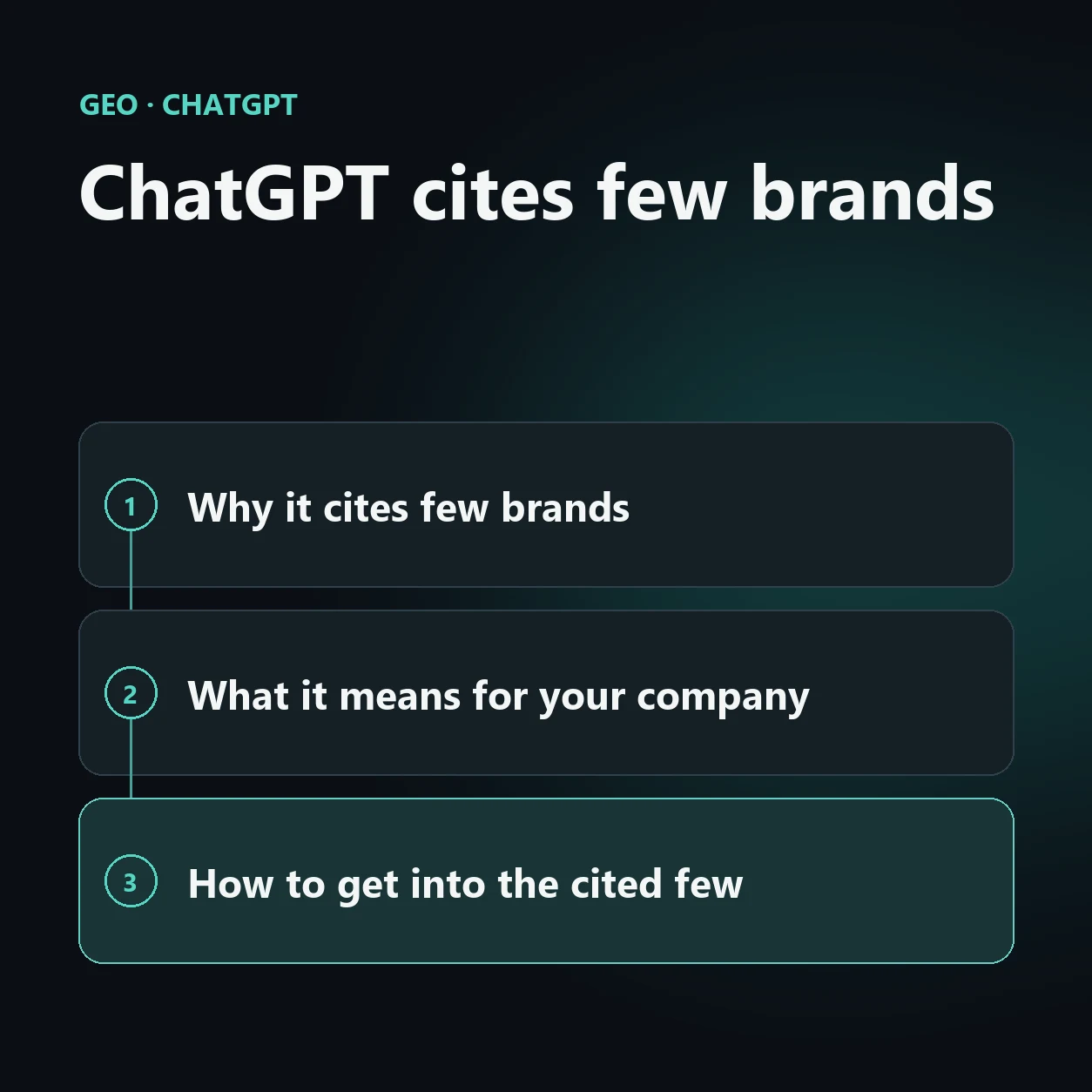
The brands cited by ChatGPT are a small minority: only a small share of companies appear in generated answers, while the majority remain invisible. This fact, observable in any test session with the main language models, is changing how companies need to think about their digital presence. It is no longer just about ranking on [...]