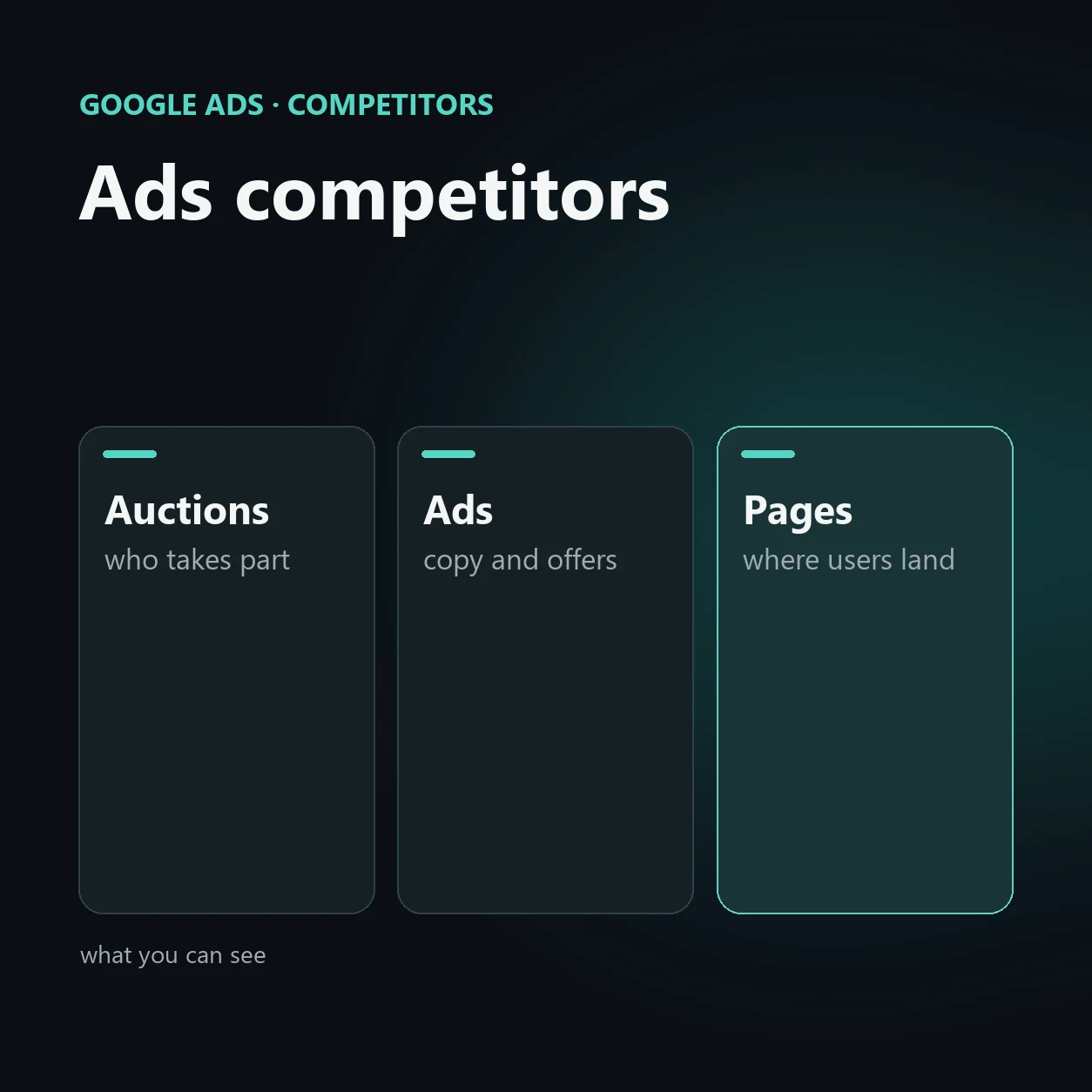
Google Ads competitor analysis shows who advertises on your searches, with which ads and how often. It does not show how much they spend or their settings: that data is not public. This guide explains what you can really see, with Google’s tools and paid ones. It is part of the guide to online competitor [...]
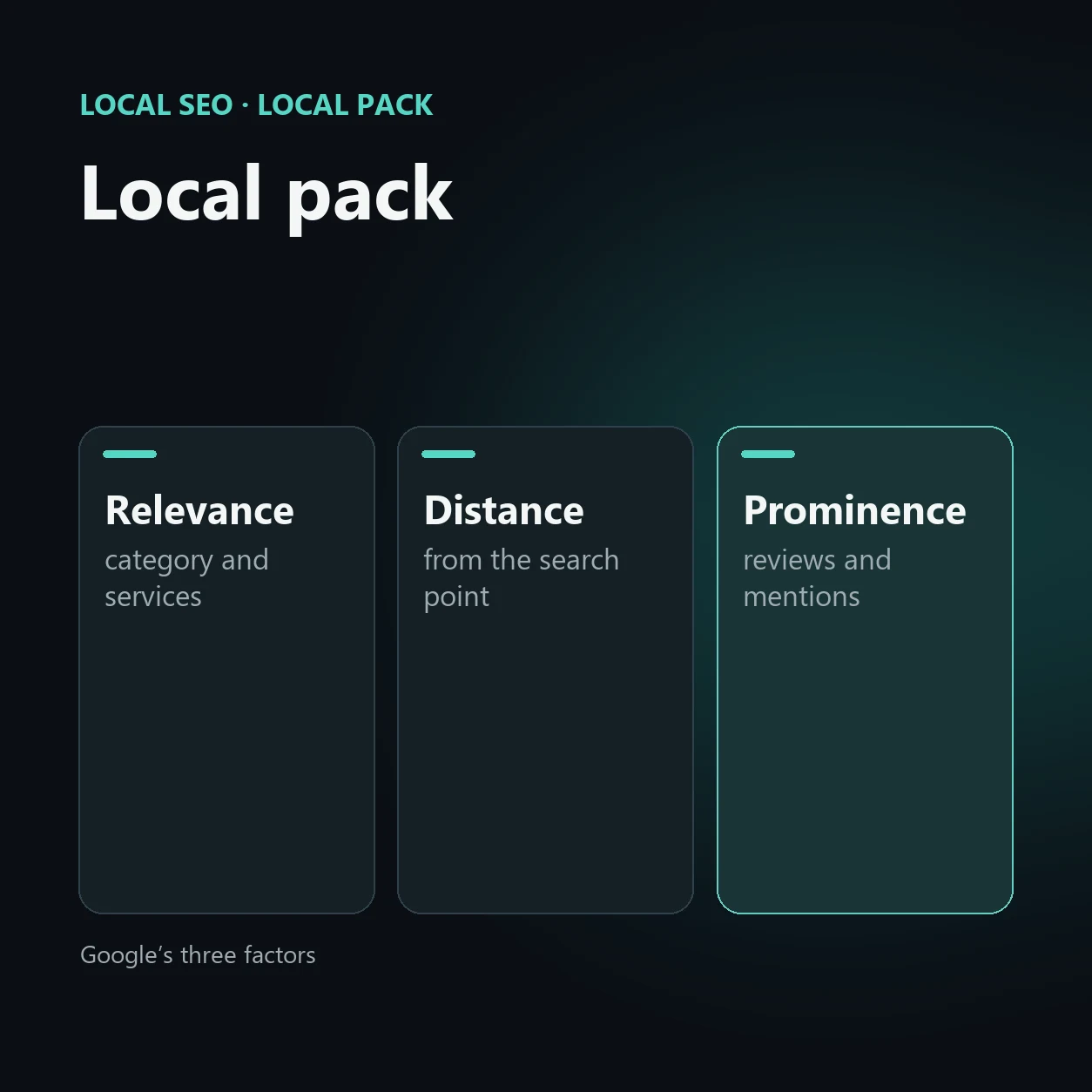
In the local pack, your competitors are the three listings Google shows on the map for a search with local intent, and they change from one point of the city to another. Analyzing them means understanding why Google picks them: based on relevance, distance and prominence, the three factors Google states for local ranking. This [...]
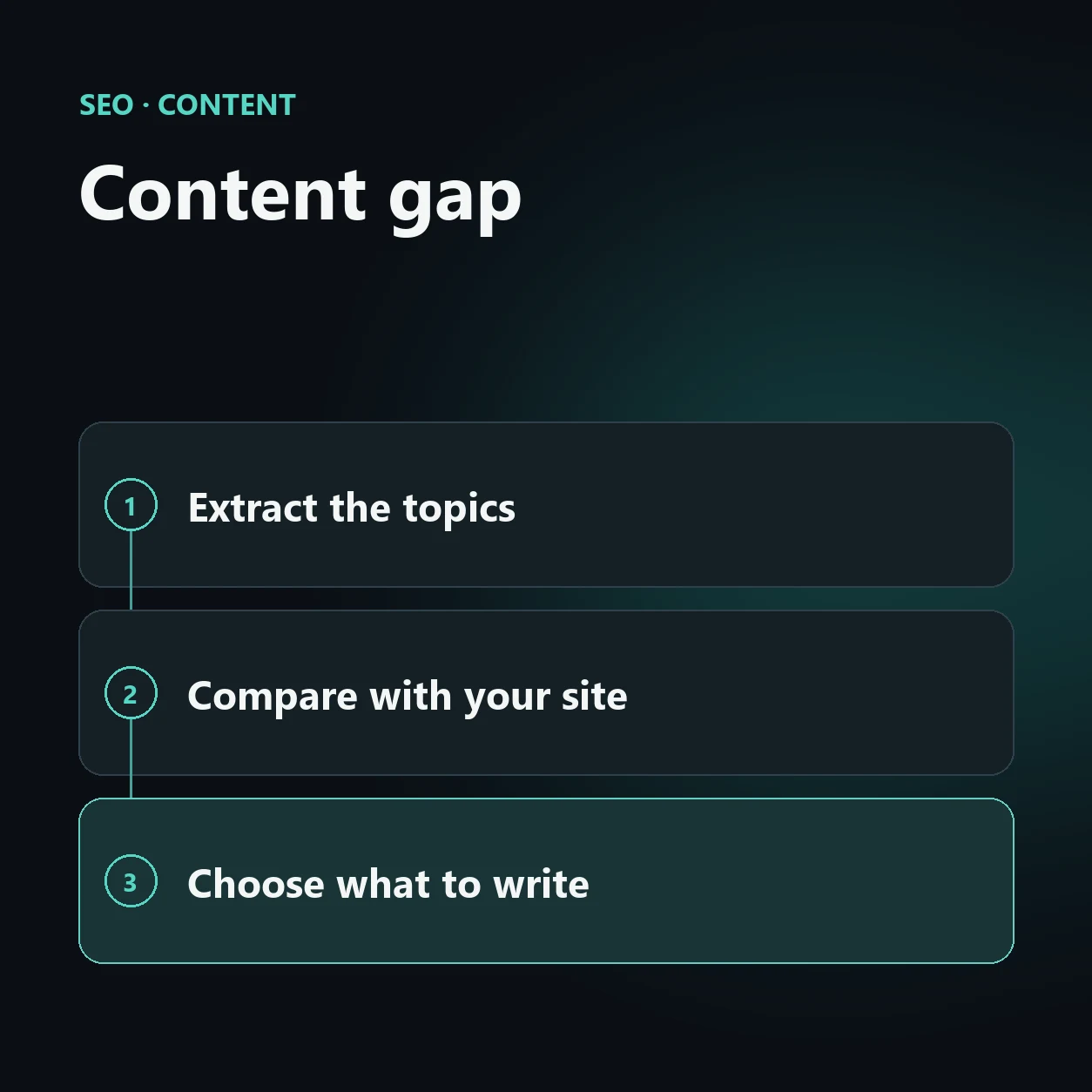
A content gap is the list of topics for which your competitors appear on Google and you have no page that answers. It is the most concrete way to decide what to write next, because it starts from searches that already exist and pages that already work. This guide explains how to get it, how [...]
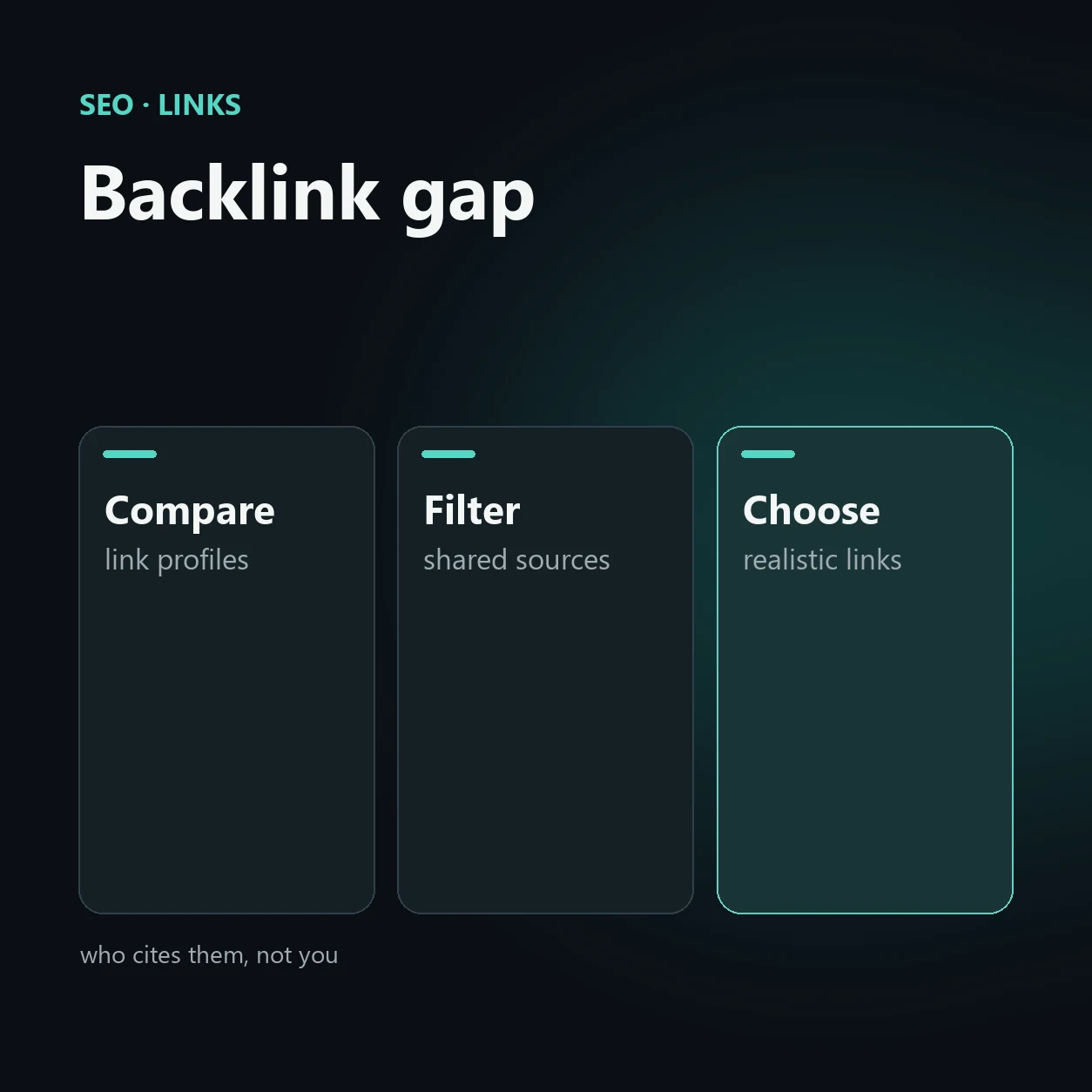
A backlink gap is the comparison between the sites that link to your competitors and those that link to you: the list of who cites them and not you. It helps you understand where links can be earned in your industry and which ones are realistic for you. It is not for chasing quantity. This [...]
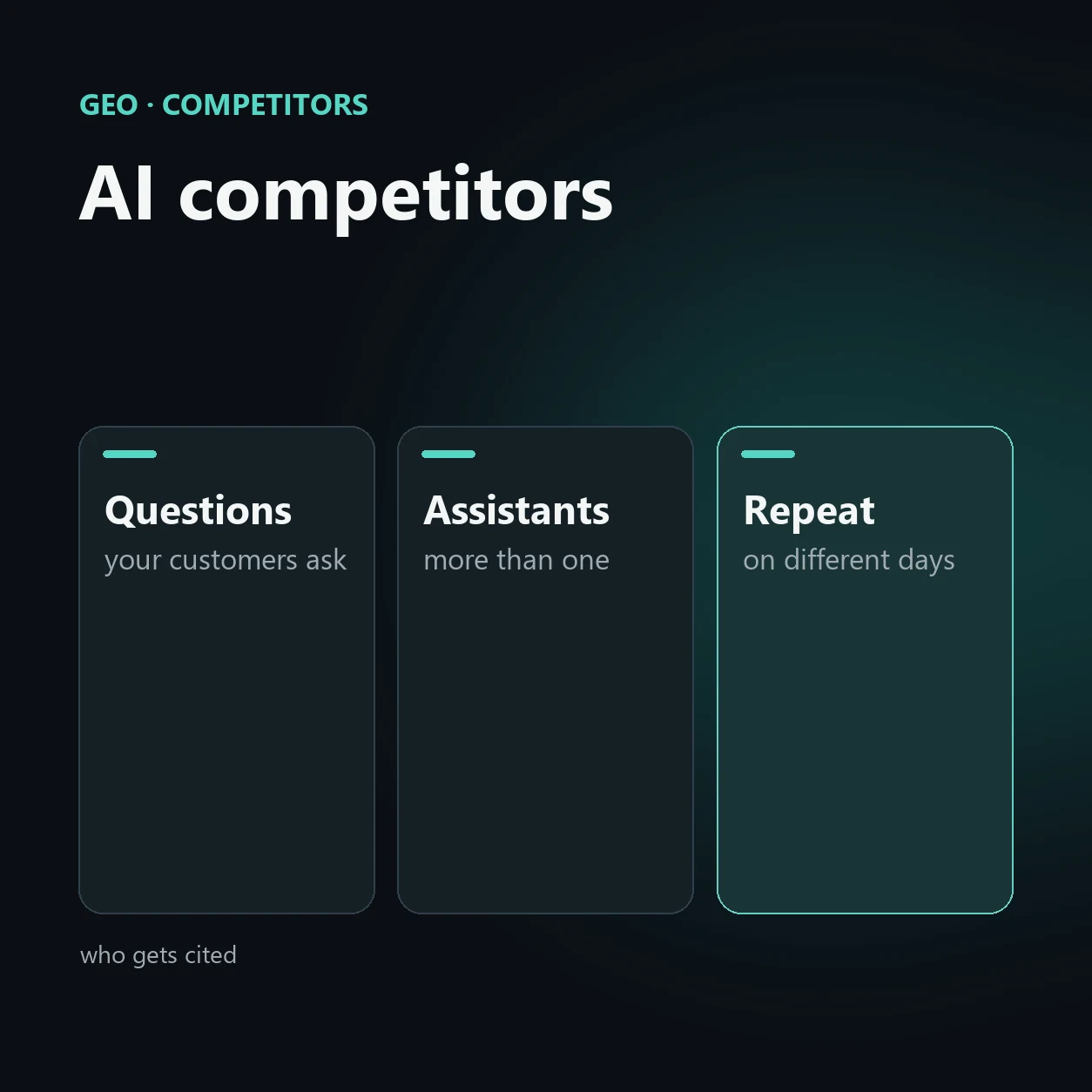
In AI-generated answers, your competitors are the sites cited as a source instead of yours. They can be different from the ones you see on Google’s first page. Finding them takes a manual test with fixed rules, because answers change from one request to the next. This guide proposes a simple method and says what [...]
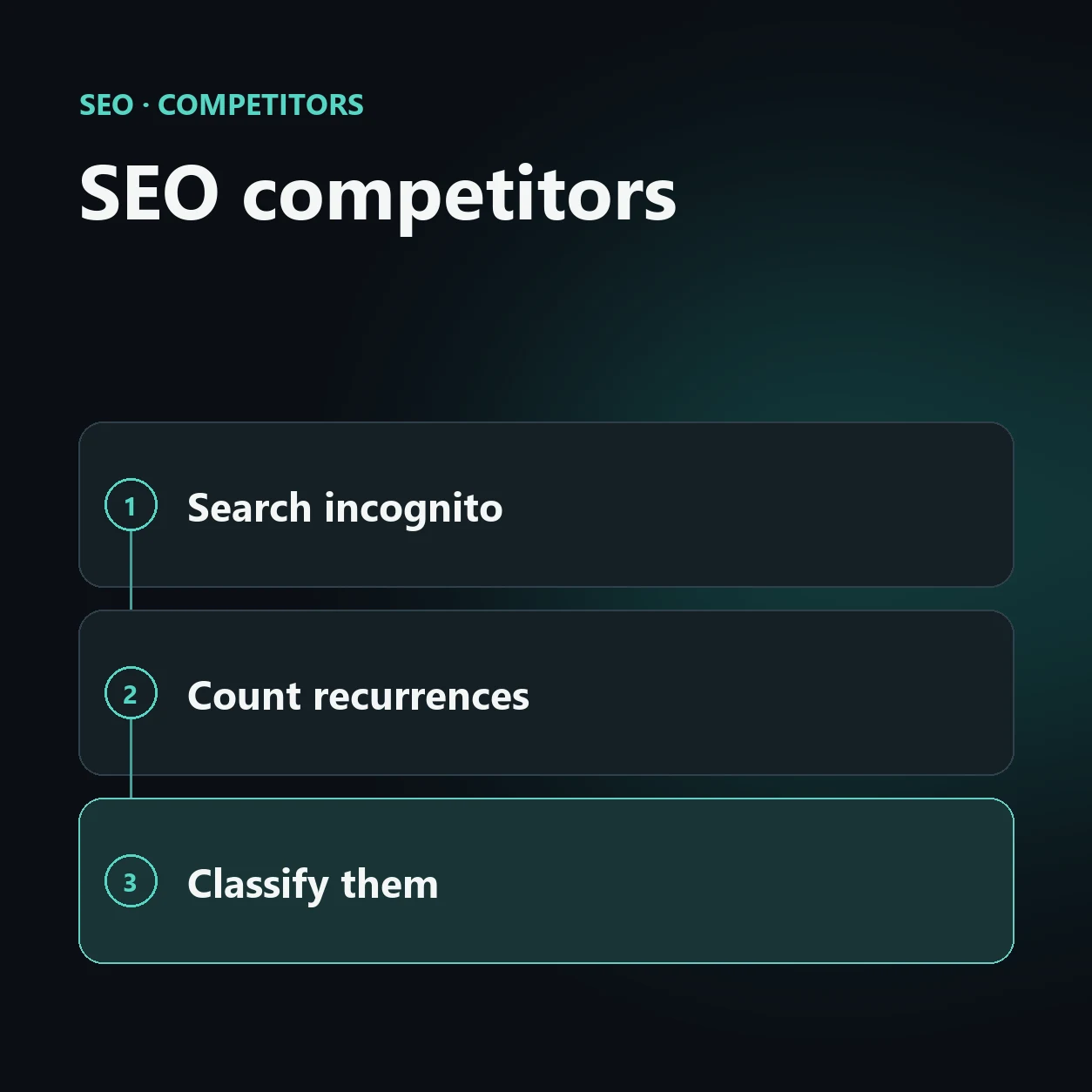
Your real SEO competitors are the sites that appear in Google’s results for the searches you care about, not necessarily the companies that sell what you sell. Finding them takes a method: start from the searches, not from the list of competitors you already know. This guide explains how to build the list in an [...]
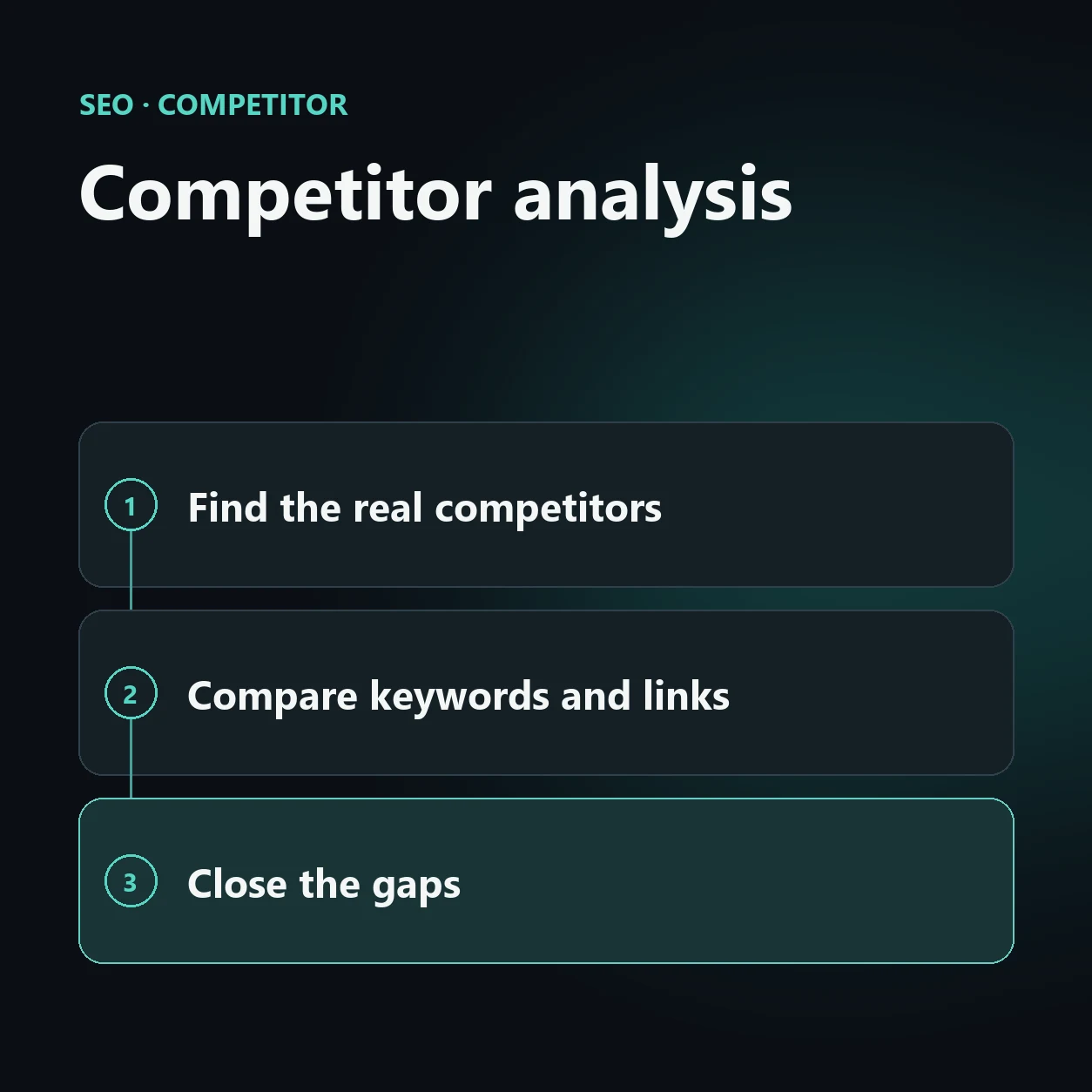
Online competitor analysis means working out who ranks ahead of you in search results, why they do, and what you can do to overtake them. It is not limited to looking at the competitors you already know: it starts from Google’s real results, because your SEO competitors are not always the ones in your industry. [...]
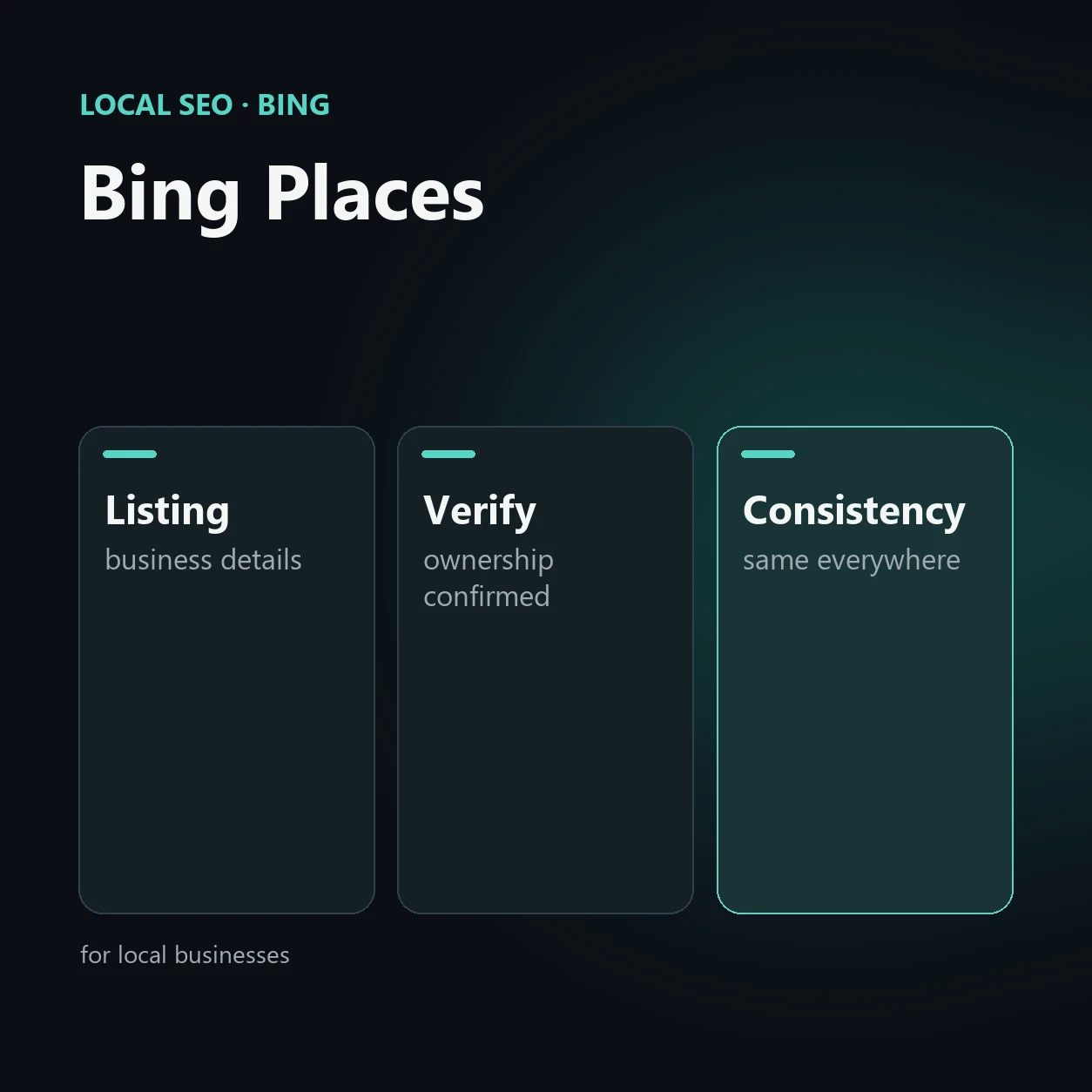
Bing Places for Business is Microsoft’s free tool for managing the listing of a business with a real location on Bing and Microsoft maps. It is for businesses that receive customers at a physical place or work in a service area; it is not for online-only businesses, which have no location to show. This guide [...]
To see Bing traffic in Google Analytics 4, look at the traffic acquisition report and filter by source. Organic search traffic from Bing usually appears with source “bing” and medium “organic”; visits from AI assistants may appear as referral sites. This guide explains where to find the data, how to compare it with Bing Webmaster [...]
A page does not show on Bing when Bing has not found it, could not read it, or decided not to put it in the index. They are three different problems with different fixes: telling them apart is half the work. This guide follows a simple order of checks, from the most trivial causes to [...]

No intermediaries
No waiting:
write to me and I will answer in person.
A bit about me
SEO specialist. Analysis, strategy and hands-on work on the pages: I follow every project personally, from start to finish.
© Copyright 2026 | Website by Andrea Viggiano - Marketing Expert